

The question arises, “Why is it desirable to pursue an integral spiritual practice? Why not a more conventional spiritual approach?” The following topics build the case for an integral spirituality.
The Evolutionary Arc
The initial insight that led to the proposal of an integral spirituality was tied to the discovery of evolution as a biological process in material reality. Both Aurobindo and Teilhard de Chardin, contemporaries but unknown to each other in the early 20th century, recognized in their spiritual philosophies that the observable Darwinian biological process of evolution was a symbol of a more significant spiritual movement. This movement implicitly asserted that different capacities or dimensions of species’ incarnations were not monolithic and explicitly holistic from the beginning, but that they developed in a sequential manner, with one capacity growing out of the previous, and each stage was dependent upon the predecessor stage for its emergence. Broadly speaking, these stages comprised the well-known idea of the chain of being – from the purely physical/material dimensions, vegetative life emerged, followed by animal life, then in man and select other species by the development of mind. Likewise, in an individual’s growth and development, we see the successive emergence of various planes of being, with mind being the last to fully form in conventional development. This process is captured in a nutshell (though not entirely accurately) by the phrase “ontogeny recapitulates phylogeny.” In their respective philosophies, each man proposed that mind as conventionally understood was not the terminus of life’s development, that higher and hidden spiritual capacities were waiting to be developed and expressed, and that evolution implied a purpose or design beyond what was conveyed by mere scientific observations and theory. As spiritual visionaries, both of these men proposed that a spiritual goal of Existence was driving the evolutionary process on planet Earth forward – for Aurobindo, that goal was “The Life Divine” – a transformation and infusion of life on Earth with the full power and consciousness of the Divine. For Teilhard de Chardin, the goal was the Omega Point – essentially, his understanding of God and the Godhead in an evolutionary universe. Note that these goals as presented here are not an individual’s goals, but goals of Life and Spirit, broadly conceived.
The unique beauty of the spiritual endeavor in man is that the hitherto blind and automatic processes of evolution can be consciously directed and focused through spiritual application. Consciousness applied in a directed focus accelerates an individual’s (or collectively, humanity’s) evolutionary development. What formerly could have taken long stretches of time to work out through the biological process alone, with many obstacles and dead-ends, could now conceivably be achieved within the span of a single human life, or for those spiritual views incorporating the idea of reincarnation, within a few lifetimes instead of hundreds. Thus, the motivation of spiritual pursuit in this evolutionary context is laid into place.
But an additional insight flowed from this understanding as well; evolution is not a strictly linear phenomenon, leaving one stage entirely behind as the next stage develops from it. Rather, these stages are like nested dolls, and remain in evidence as different dimensions of our being throughout our existence. Once a human being develops cognitive capacities, for example, he does not abandon the vital or emotional stage; likewise, all of us continue to exhibit a material presence, the “basement” of our physical lives – the flesh and blood of our lives on this planet, even as we have fully brought forth all of the other evolutionary potentials implicit in our current reach of development. Taken even further, these elements of life are based on what we currently understand as inconscient reality itself – the atoms, molecules, and elements of material reality. So we are, and continue to be throughout our lives, multi-faceted creatures with several different dimensions to our being, in life all of which are capable of growth and development, of “Becoming.”
Conventional spirituality does not typically recognize this evolutionary arc to human history. As a result, it generally overlooks and fails to acknowledge the multi-dimensional aspects of humanness. Spiritual development is conceived of as originating from a static, fixed base of reference, with the previous developments of human life disregarded, even ignored. In systems such as these, usually the mind or the heart is taken as the sole base of the sadhana, and focused spiritual application and concentration is brought to bear only on this single aspect of the human being. The result, frequently, is a lopsided development of the human being, wherein some capacities are very highly developed and evolved, but others are stunted and immature. We see evidence of this in the frequently-reported stories of Eastern gurus who fall to the temptations of money, sex, or power in the culture and even become abusive towards their followers. These gurus have not practiced an integral development and thus have some critical psychological or other deficiencies that are quite evident to the outside impartial observer. That one has transcended spiritual thresholds in one dimension does not necessarily indicate that person has consequently fulfilled potentials or transcended thresholds in other dimensions.
Resistance is the name of the game here in the physical universe. Nothing is given freely in this world; there are no shortcuts. Effort is necessary at the outset to actualize one’s latent and languishing dimensions of being, regardless of the loftiness of one’s level of development in other dimensions. If one wants to manifest one’s full potential, she must address all dimensions of her being, those primary and easeful, as well as those deficient and difficult. This is the essence of the integral approach and its distinguishing characteristic from more conventional spiritual approaches.
Pursuing a well-rounded spiritual development with the inclusion of all major aspects of a human life not only guards against this lopsided individual development in spirituality, but it also puts one in the current and alignment with the Tao or Dharma of life in this world, the biological kingdom-wide evolutionary movement that carries all of us towards its goal. It is my belief and contention that these dimensions would not continue to exist and be capable of growth and development if they were spiritual dead-ends; these dimensions, too, have their inherent purposes and potentials, and they are amenable and responsive to spiritual effort and application.
The Drive for Wholeness/Completion
Carl Jung was perhaps the first figure in the psychological sciences to recognize that a drive towards wholeness or completion was present in the human psyche. Furthermore, as he notes in this selection from Aion, the drive comes not from the ego, but from the larger Self, both conscious and unconscious. It stands as as an autonomous and psychologically objective fact in the realm of the psyche, most definitely not manufactured by the superficial activities of the ego.
Intellect and feeling … are difficult to put into one harness— they conflict with one another by definition. Whoever identifies with an intellectual standpoint will occasionally find his feeling confronting him like an enemy in the guise of the anima; conversely, an intellectual animus will make violent attacks on the feeling standpoint. Therefore, anyone who wants to achieve the difficult feat of realizing something not only intellectually, but also according to its feeling-value, must for better or worse come to grips with the anima /animus problem in order to open the way for a higher union, a coniunctio oppositorum. This is an indispensable prerequisite for wholeness.
Carl Jung, Aion, Paragraphs 58-60
Although “wholeness” seems at first sight to be nothing but an abstract idea (like anima and animus), it is nevertheless empirical in so far as it is anticipated by the psyche in the form of spontaneous or autonomous symbols. These are the quaternity or mandala symbols, which occur not only in the dreams of modern people who have never heard of them, but are widely disseminated in the historical records of many peoples and many epochs. Their significance as symbols of unity and totality is amply confirmed by history as well as by empirical psychology. What at first looks like an abstract idea stands in reality for something that exists and can be experienced, that demonstrates its a priori presence spontaneously. Wholeness is thus an objective factor that confronts the subject independently of him, like anima or animus; and just as the latter have a higher position in the hierarchy than the shadow, so wholeness lays claim to a position and a value superior to those of the syzygy. The syzygy seems to represent at least a substantial portion of it, if not actually two halves of the totality formed by the royal brother- sister pair, and hence the tension of opposites from which the divine child is born as the symbol of unity.
Unity and totality stand at the highest point on the scale of objective values because their symbols can no longer be distinguished from the imago Dei…
Closely related to the concept of an individual drive towards wholeness or completion is the concept of healing. The verb “heal” has the following etymology:
heal (v.)
Source: Eytmonline.com
Old English hælan “cure; save; make whole, sound and well,” from Proto-Germanic *hailjan (source also of Old Saxon helian, Old Norse heila, Old Frisian hela, Dutch helen, German heilen, Gothic ga-hailjan “to heal, cure”), literally “to make whole” (from PIE *kailo- “whole;” see health). Intransitive sense from late 14c. Related: Healed; healing.
Related to this root verb are the words health and healing, with the following origins:
health (n.)
Old English hælþ “wholeness, a being whole, sound or well,” from Proto-Germanic *hailitho, from PIE *kailo- “whole, uninjured, of good omen” (source also of Old English hal “hale, whole;” Old Norse heill “healthy;” Old English halig, Old Norse helge “holy, sacred;” Old English hælan “to heal”). With Proto-Germanic abstract noun suffix *-itho (see -th (2)).healing (n.)
Source: Eytmonline.com
“restoration to health,” Old English hæling, verbal noun from heal (v.). Figurative sense of “restoration of wholeness” is from early 13c.
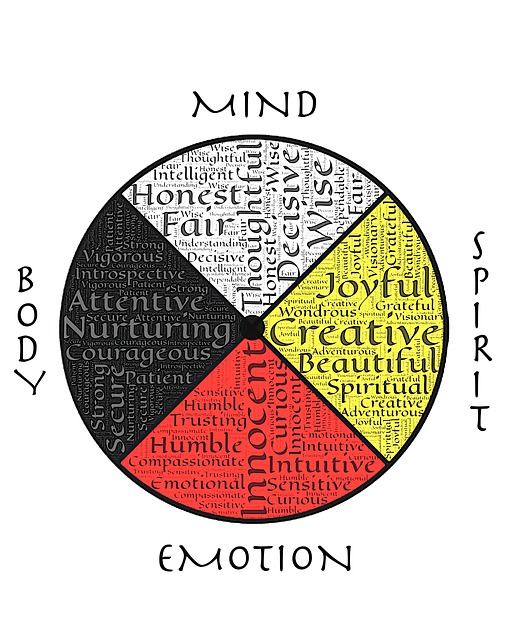
We typically think of healing only in a physical sense, and only as a desired consequence when our previous physical wholeness, likely taken for granted, has been damaged, diminished or fragmented in some sense. There is a painful awareness of the loss or diminution of an implicit and previously-experienced unity. As a consequence, the normal human reaction is a drive towards recovery of the formerly unified and undamaged state of health. But there is no reason that these notions of health and healing must be restricted to the purely physical; they can equally apply to the psychological and, in a unified continuum between psyche and spirit, even to the spiritual. The intriguing difference here between the two considerations of healing and health is that while we are aware of the prior state of wholeness where the physical is concerned, the “damage” to the whole Self in the psyche likely occurs before an individual’s conscious awareness focused as a sense of self even exists. It may well be that the very process of constellating a center of awareness in the human being, the formation of the ego, creates the original injury that made a return to the prior “healthy” (i.e., whole) state necessary and provides the unconscious motivation in the psyche to recover that state. Wholeness is thus subliminally longed-for, desired. In a sense, then, the drive for wholeness and unity in the human being may be demanded by the psyche/spirit as a compensation for the creation of the human ego, as an attempt to heal the original (and unavoidable) psychic injury.
While Jung conceived of wholeness strictly in psychological terms, comprised broadly of the unconscious and conscious aspects of the Self, there is little doubt that in the surface conscious awareness considered alone we experience ourselves as divided beings with conflicting drives and claims on our psychic libido and time. This is quite common as an experience in our culture, reflected in our secular notions of attempting to balance work-life considerations, family claims and obligations versus the needs of the individual self, and even competing claims and the opportunity costs of nourishing selected aspects of our lives at the expense of other needs and potentials – for example, physical fitness versus intellectual development via reading or study, or social involvement and commitments versus emotional or psychological exploration time. Even the spiritual life, narrowly conceived, can become one more competing claim on our time and attention when not integrated with our other needs, thereby contributing to an ongoing fragmentation of our being. We only have so much time and energy to spare, and in the absence of a unifying and living principle to which all aspects are intimately related, we continue to elevate and favor some aspects of our development at the expense of others. We are not unified to begin with. We are legion, for we are many, to paraphrase the biblical saying. We thus continue to be divided and partial in our approach to life, and by extension to spirit. When we think in depth about the matter, it appears that the division of the self is our de facto state of being. Consequently, the drive for wholeness and completion can also manifest as a need for unification and balance among the many parts of ourselves. How wonderful it would be if we could put all of our personal divided kingdoms under one rule, under one authority that would justly and fairly administer the whole simultaneously for the health and unfoldment of each part and the well-being of the whole! Awareness and equanimity, the fruits of an integral spiritual practice, can provide just that benign and fair rulership that our divided beings are thirsting after. By pursuing the development of an encompassing awareness in all of the myriad aspects of our lives – body, heart, mind, spirit – and establishing that central awareness as the common hub that all aspects are related to, we are embarking on the royal road of an integral spiritual practice with the hallmarks of balance and unification of our many parts. These aspects can thus be held up for work that has the potential of ultimately reconciling and integrating all of them into one unified. internally powerful and balanced life. From the perspective of Western humanity’s current station, I can think of no better personal motivation to pursue an integral spirituality.
The Demands of Spiritual Transformation
I’ve already suggested in several passages on this website that spiritual transformation can potentially make a very great demand upon the person, particularly if the personal development beforehand is generally uneven or overly focused on one aspect of life. It appears that it is possible to have either a gentle, gradual transition into the transpersonal realms with no untoward effects, a sudden, disorienting but still relatively gentle transition to those realms, or a sudden, violent and potentially destructive and damaging transition. While there doesn’t appear to be any ironclad rule about any of this, as exceptions can be found to any hypothesis, it would seem that the gentle transitions might result from a long period of preparation and relatively balanced development across all aspects of the seeker’s life. Transpersonal realm entry in those cases is more akin to a gradual dissolution of boundaries and limits that previously separated states of consciousness. Sudden, but still mild entries to those realms could correspond to slightly less balance in one’s life, and less time of preparation. Sudden and tumultuous transitions suggest a development that was greatly uneven – far advanced in one aspect as other aspects, seen in retrospect, lagged well behind. The difficulty can be further compounded if one is not a regular practitioner of any spiritual art or discipline in the time prior to a spiritual transition. The danger in all of this is that while one highly developed aspect may be capable of a sudden breakthrough to a new level of consciousness with potential benefit accruing to that limited aspect, transformation is by definition a whole-person phenomenon. The consequences of a transformational breakthrough do not stop within the bounds of the one aspect that was capable of piercing the veil; the entire being, parts developed and undeveloped, may suddenly find itself swamped in molten fire it is either prepared to cope with or not.
Richard Moss uses a vivid illustration as an analogy – Mr. Sugar Cube has always considered himself as a cube. It has been his complete understanding of who he is for as long as he can remember. Mr. Sugar Cube can have a serious ordeal on his hands when boiling water is poured over him and he finds all parts of what he regarded as himself rapidly melting and dissolving into the new matrix. Even worse for Mr. Sugar Cube if he had been engaged with a practice intended to invoke the boiling water experience with no clear understanding of what he was actually invoking, or what the limits of his innate capacities and personal toleration might be. To understate the matter considerably, this is definitely not an auspicious state of affairs. Perhaps Mr. Sugar Cube would be better off if he invoked only a luke-warm water experience to allow himself the time and preparation to adjust to the changes!
Aurobindo speaks in certain letters and writings of the importance of wideness as a spiritual quality to be cultivated. Wideness is an antidote for the harmful effects of narrowness, which is identical in several respects to the the over-development of one aspect we have been speaking of. He notes:
When the consciousness is narrow and personal or shut in the body, it is difficult to receive from the Divine – the wider it expands, the more it can receive. A time comes when it feels as wide as the world and able to receive all of the Divine into itself.
Sri Aurobindo, Letters on Yoga III
Wideness is necessary for the working of the higher consciousness — if the being is shut up in itself, there can be intense experiences and some opening to touches from the heights, but not the full stable basis for the transformation.
If the pressure is too great, the remedy is to widen the consciousness. With the peace and silence there should come a wideness that can receive any amount of Force without any reactions, whether heaviness or compulsion to remain withdrawn or the difficulty of the eyes etc.
The usual mental means to widen the consciousness is to think of and feel oneself as spreading out into space beyond the body — as a corrective to the thought and feeling of oneself as identified with the body and shut up in it. After a time this leads to a substantial experience of wide consciousness beyond the body. The means to quieten the physical consciousness is to detach oneself from all restless vibrations, not by any struggle or effort but by a simple easy will of quietude. However now that the higher Force is bringing quietude, these mental means may not be necessary — for the peace from above usually brings the wideness of the self — though for some it brings it at once, for others it takes time.
This is a new conception of a spiritual attribute, one that has not been introduced before. It has particular relevance to the topic of tumultuous spiritual transitions; turbulence of any great degree in a spiritual transition suggests the existence of a channel that is narrow, entrenched, and strewn with obstacles in the path, much like a stream course on a steep slope in the mountains. The turbulence can be seen as proportional to the narrowness and “roughness” of the receiving channel. To take the analogy further, wideness, by contrast, calls to mind a broad, flat and expansive river channel opening into the sea, where a great volume of water can be moved and admitted into reception with little to no turbulence at all. Thus, wideness as Aurobindo identifies it, could indeed be the one spiritual attribute that can work with the human capacity to expand and accommodate new noetic experiences and thereby facilitate and ease an individual’s passage into transpersonal realms.
An integral spiritual practice not only works to ensure a relatively even balance across all aspects of a person’s life, but it may also aid in preventing an unhealthy over-focus on one or two aspects that could potentially lead to cataclysmic events. It promotes the wideness that Aurobindo advocates as a desirable quality to be cultivated. As the entire intent of Via Perennis is to penetrate into mystic or gnostic realms, an integral spiritual practice is the most practical empirical means of ensuring that the penetration and transcendence of long-entrenched thresholds and limits is as safe and gentle as it possibly can be.
Conclusion
These three topics considered together make for a compelling case for one to adopt an integral spiritual practice. As one is mindful of the evolutionary roots and the arc of the evolutionary process for life on planet Earth, an integral approach puts one in alignment with the way matters actually are for the human species in the wake of the long road of evolutionary change, acknowledging, incorporating and working with the several latent dimensions of being present in all of us in a way that conventional spiritual pursuit does not. An integral spiritual practice can also address the individual’s psychic need and drive for completion and wholeness, balance across all facets of being, and unification of those facets in the light of an encompassing awareness. Lastly, it offers an effective and practical personal safeguard against the possible turbulence and overwhelm of a sudden breakthrough to mystic or gnostic realms, working to broaden the base of reception, ameliorate any negative effects, and dampen any actions that could potentially be harmful to the spiritual seeker. Because of these benefits and advantages, integral spiritual practice for Western hearts, minds, and souls stands poised to become a much more prevalent mode of spiritual seeking in the decades, perhaps even centuries to come.
 Via Perennis