

In homeopathy, remedies are often matched not just to symptoms, but to constitutional types—deep-seated patterns of personality, perception, and soul expression that shape a person’s experience across their lifetime. These types reflect a kind of energetic signature: a blend of temperament, coping style, and existential orientation that may manifest healthily or in distorted form depending on life circumstances. Identifying a person’s constitutional essence offers a powerful handle for selecting the correct remedy, but it also reveals something more enduring—a portrait of the soul’s architecture, its longings, defenses, and potential for transformation.
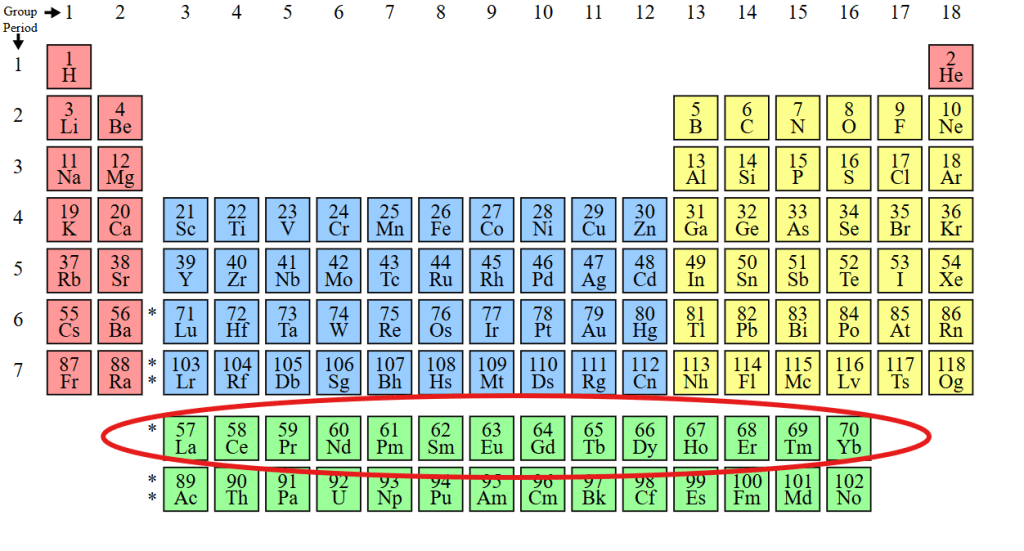
The Lanthanide homeopathic remedies of the chemical periodic table are a relatively recent addition to the homeopathic materia medica, the grand inventory of substances and their curative effects, emerging only in the last few decades through the pioneering work of Jan Scholten. Scholten, a Dutch chemist and homeopath, deserves our thanks for observing and astutely intuiting several previously unknown remedy pictures, first presented in his 2005 book “Secret Lanthanides.” Chemically, the Lanthanides are nestled between the Silver series and the Gold series on the periodic table—each representing a distinct phase in the evolution of human consciousness. The Silver series is associated with creativity, communication, and performance; the Gold series with leadership, responsibility, and legacy. The Lanthanides, by contrast, reflect inner autonomy, self-governance, and the struggle for individuation—often invisible to the outer world, yet rich in depth and moral clarity. Scholten has asserted that the Lanthanides, positioned where they are on the periodic table, are a series learning “to express silver gifts to a golden ideal…but for various reasons the full expression is thwarted.” Fittingly, these elements are “hidden” in both a literal and symbolic sense – differences buried beneath the surface of atomic structure, their psychological themes are likewise often buried beneath layers of social expectation and emotional defense.
Each Lanthanide remedy carries a distinct psychological signature, reflecting nuanced inner dynamics. Consider Praseodymium, a remedy marked by deep introspection, emotional vulnerability, and a lifelong striving to be ethically impeccable—often accompanied by a sense of invisibility or misrecognition. By contrast, Samarium embodies the conscientious helper, someone who works tirelessly with quiet integrity, often carrying emotional wounds that fuel their devotion to service. Neodymium shifts the focus to present as highly capable and performance-driven, with a strong need for harmony and external validation, yet prone to internal conflict when perfection is unattainable. Terbium expresses assertiveness and strategic clarity, with a strong sense of responsibility and a desire to lead, though still negotiating self-trust. These are just a few examples. With diligence, each remedy in the series can be linked to a portrait of a soul aspiring to manifest its gifts and leadership in the external world; this is a progressive view of leadership qualities in gestation, birth and growth, before actual manifestation in the realm of outward leadership and responsibility. Each of these remedies can be viewed as an interior individuation struggle, where the soul labors to assume mastery of some particular aspect of its domain.
A proposal for consideration: what if we viewed these lanthanide homeopathic remedies not just as constitutional types, not as thwarted or failed efforts to achieve a golden ideal, but as stages in the evolution of a psychological archetype?
Psychiatrist and Jungian analyst Jean Shinoda Bolen introduced a powerful framework for understanding psychology in her books Gods in Everyman. Building on her earlier work with feminine archetypes (Goddesses in Every Woman), Bolen explores eight Greek gods as symbolic patterns that shape men’s personalities, relationships, and life paths. These include Zeus (authority and leadership), Poseidon (emotional depth and volatility), Apollo (clarity and order), Hermes (communication and movement), Hephaestus (craftsmanship and solitude), Ares (warrior energy), Dionysus (sensuality and transformation), and Hades (introversion and soul depth). Each archetype reflects a different mode of being. In her work, Bolen encourages men and women to recognize which gods and goddesses are active, which are suppressed, and which may need integration. Among these, the King archetype—most clearly embodied by Zeus—represents sovereign authority, moral leadership, and the capacity to bless and order the world. When mature and healthy, this archetype governs with wisdom, clarity, and generativity; when shadowed, it may collapse into tyranny, impotence, or invisibility. Think of Zeus, commanding the Olympian order, or Hades, ruling the unseen realm with quiet power—each a King, but in radically different domains. In modern life, King energy might manifest in a CEO who leads with vision and integrity, a respected community elder, or a head coach who inspires excellence and cohesion—figures who hold space, set direction, and embody a stabilizing presence.
Yet the journey toward sovereignty often begins in obscurity. The archetype of Persephone—the abducted maiden who descends into the underworld and eventually becomes one of its rulers—is a potent symbol of latent King energy in its earliest form. As the myth demonstrates, women, too, can carry and manifest King energy; it is no respecter of traditional gender differences (Note that I acknowledge the Queen as an important psychological archetype as well, with its own distinct and unique qualities, but traits of both King and Queen can and do overlap to a considerable degree psychologically. Here, we focus on the King’s energy as expressed through a feminine figure). This stage is not just a man’s archetype; it represents a universal passage through vulnerability into sovereignty, where the King energy is seeded in silence and grown through integration. Persephone’s story reflects the soul’s awakening to depth, power, and autonomy through involuntary transformation. Before the crown is claimed, there is descent, disorientation, and the slow emergence of inner authority.
Not all Kings rule in daylight. There are night Kings—sovereigns of the inner world, whose authority is subtle, symbolic, and often unrecognized by the collective. This is the reflection of Persephone’s established partner in rulership, Hades, god of the underworld, god of riches and depth. These are the philosophers who write incisive books that few understand, the mathematicians who discover truths the world isn’t yet ready to grasp, poets who write moving and multi-dimensional verse that never sees the light of day, inventors, like Nikola Tesla, toiling away in isolated labs, misunderstood and far ahead of their times. Their power lies not in visibility, but in depth. They shape the architecture of thought, intuition, and soul—but often without the crown, without the throne, without the recognition in their time. Their sovereignty is real, but subterranean.
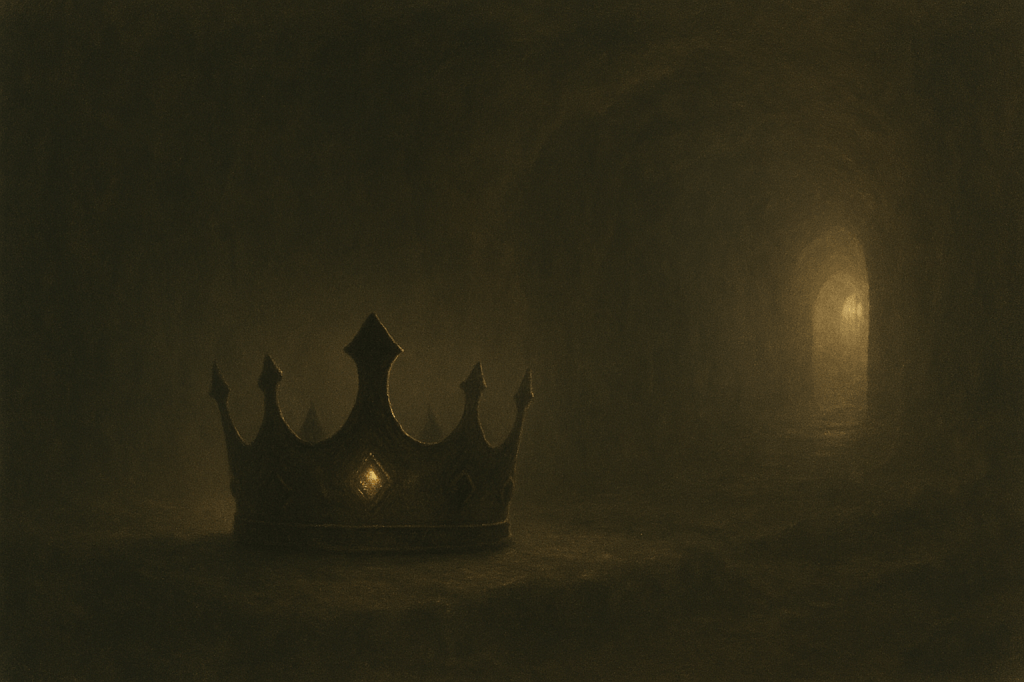
While the Lanthanide remedies reflect the soul’s journey toward inner autonomy, the Gold Series represents the next evolutionary phase: the challenge of externalized leadership. Here, the King archetype is no longer hidden or emerging—it is active, visible, and burdened with responsibility. These remedies speak to those who hold power in the outer world—CEOs, heads of state, public figures, and community leaders—where the stakes are high and the consequences of misalignment are profound.
But if the autonomy cultivated in the Lanthanide phase is not fully integrated, the transition into Gold Series rulership can be fraught. The shadow of unassimilated depth may erupt as tyranny, collapse, or emotional volatility. This is where Poseidon, mapped to Platina metallicum in the Gold series, becomes instructive: a sovereign of immense power who has not mastered containment. His rage, pride, and impulsiveness reflect the dangers of ruling without inner coherence. By contrast, Zeus, also placed in the Gold Series, represents the archetype of structured authority—commanding, strategic, and often overburdened by the weight of leadership. And Theseus, bridging the Lanthanide and Gold domains, offers a model of earned sovereignty—one who descends, confronts shadow, and returns ready to lead.
👑 Archetypal Mapping of Sovereignty Remedies
| Remedy | Symbol / Atomic # | Archetype | Stage of King Evolution | Archetypal Resonance |
| Cerium | Ce / 58 | Persephone | Latent Sovereign / Queen-in-Waiting | Timid, emotionally cocooned, caught between opposing forces; sensing autonomy but not yet embodying it. |
| Praseodymium | Pr / 59 | Hades | Night King / Hidden Sovereign | Inner sovereign, withdrawn ruler of depth; moral clarity without external validation; imprisoned King energy. |
| Neodymium | Nd / 60 | Apollo | Prince / Emerging Daylight King | High-functioning, performance-driven; seeks harmony and recognition; vulnerable to judgment. |
| Samarium | Sm / 62 | Chiron / Fisher King | Healer-King / Mentor Sovereign | Wounded healer; diligent, ethical, emotionally attuned; bridges inner pain with service. |
| Gadolinium | Gd / 64 | Zeus (Lanthanide strain) | Daylight King under strain | Commanding presence with internalized pressure; struggles with visibility and control. |
| Terbium | Tb / 65 | Theseus | Hero-King / Sovereign in Formation | Courageous, tested, morally evolving; bridges inner trials with outer leadership. |
| Platina metallicum | Pt / 78 | Poseidon (Shadowed) | Volatile Sovereign / Tyrant King | Explosive, prideful, emotionally reactive; power exceeds containment, leading to destructive rulership. |
| Aurum metallicum | Au / 79 | Zeus (Established) | Mature Sovereign / Burdened King | Noble, responsible, often despairing under the weight of leadership; struggles with failure and legacy. |
Among these, notable is Samarium as Chiron; this mapping evokes the myth of the Fisher King—a sovereign wounded in ways that cannot be healed by conventional means. His suffering is not merely personal, but symbolic: the vitality of his realm reflects the integrity of his soul. Like Chiron, the Fisher King leads through wisdom earned in pain, offering guidance and healing to others while quietly bearing the wound that grants him insight but denies him wholeness. His sovereignty is not built on conquest or charisma, but on the moral authority of having suffered and stayed conscious. In this way, Samarium reflects a mentor sovereign—one who blesses through restraint, teaches through example, and holds space for others to heal, even as his own healing remains elusive. He is the King who does not sit on a throne, but whose presence sanctifies the inner court.
In our material realm, built around visibility, form, and ritualized function, kings are crowned in a single moment of coronation—an event that implies kingship is simply bestowed. But the psyche knows otherwise. In the transcendental realm, true kingship—the flowering of the King archetype—is never merely granted. Like a seed, it must be planted in dark earth, conceived in the hidden womb, and grown gradually out of sight, through its own unfolding. At each stage it undergoes trials and initiations, the slow forging of sovereignty – the sovereignty of autonomous selfhood, precursor to external leadership roles – in silence and obscurity.
The true coronation, the full fruition of the archetype, comes only when this hidden apprenticeship is complete—when the sovereign emerges like a butterfly from its chrysalis and steps into the full weight of responsibility and the full visibility of daylight. That visible moment of leadership assumption is worthy of celebration, yet it rests upon a long, unseen preparation: a lonely alchemy where the qualities of kingship are tested, tempered, and integrated within the depths of the psyche. Like Aragorn in the Lord of the Rings, strengthened and tested by long trials while dwelling and toiling in obscurity before he ever assumed his throne, the kingly psyche evolves slowly, well out of the limelight, yet irrevocably flowing towards its destiny.
With the discovery of the Lanthanide series as homeopathic remedies, the veil has been lifted on this subterranean process. These remedies give us a framework for understanding the step-by-step growth of hidden sovereignty, each with its own variation, long before the king steps forth into the light of day. For this insight, Jan Scholten deserves profound thanks—for linking the substances of the material world with their psychic correlates, and for revealing how this overlooked group of metals reflects one of the deepest archetypal journeys of the soul. The Lanthanides teach us: true authority grows silently in the dark long before it emerges to shine brilliantly in the day.
For more fascinating insights on the fertile nexus between homeopathy and Jungian psychology, see Edward Whitmont’s books “Psyche and Substance” and ‘The Alchemy of Healing.”
This post was developed with the assistance of AI.
 Via Perennis