

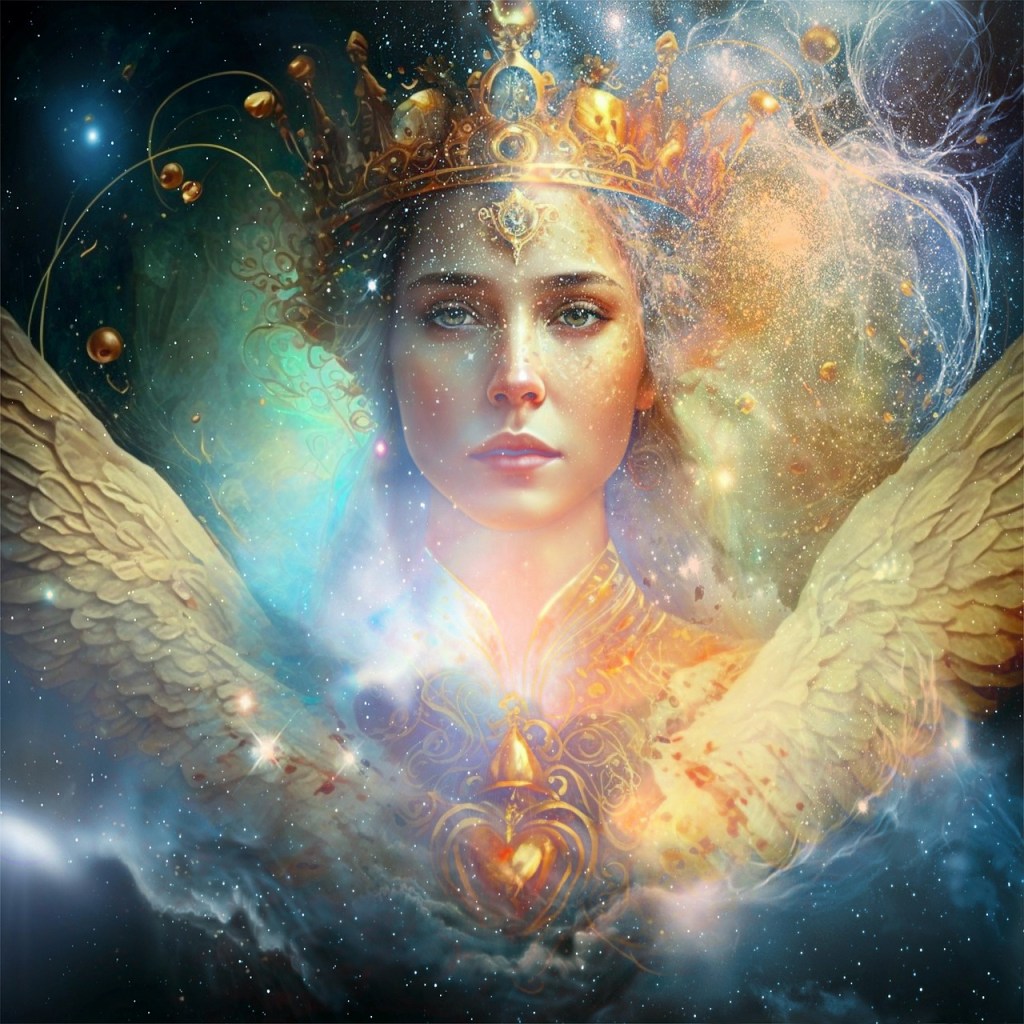
I am Protennoia, the Thought that dwells in the Light. I am the movement that dwells in the All, she in whom the All takes its stand, the first-born among those who came to be, she who exists before the All. She (Protennoia) is called by three names, although she dwells alone, since she is perfect. I am invisible within the Thought of the Invisible One. I am revealed in the immeasurable, ineffable (things). I am incomprehensible, dwelling in the incomprehensible. I move in every creature…
…I descended to the midst of the underworld, and I shone down upon the darkness. It is I who poured forth the water. It is I who am hidden within radiant waters. I am the one who gradually put forth the All by my Thought. It is I who am laden with the Voice. It is through me that Gnosis comes forth. I dwell in the ineffable and unknowable ones. I am perception and knowledge, uttering a Voice by means of thought. I am the real Voice. I cry out in everyone, and they recognize it (the voice), since a seed indwells them. I am the Thought of the Father, and through me proceeded the Voice, that is, the knowledge of the everlasting things. I exist as Thought for the All — being joined to the unknowable and incomprehensible Thought — I revealed myself — yes, I — among all those who recognize me. For it is I who am joined with everyone by virtue of the hidden Thought and an exalted , even a Voice from the invisible Thought. And it is immeasurable, since it dwells in the Immeasurable One. It is a mystery; it is unrestrainable by the Incomprehensible One. It is invisible to all those who are visible in the All. It is a Light dwelling in Light.
Trimorphic Protennoia, The Nag Hammadi Library: Translated by John D. Turner
The topic of the Divine Feminine as brought forth in Gnostic works of Western origin is multifaceted and bewilderingly rich. Unlike the orthodoxy of Jewish and especially Christian faiths, where almost every trace of the Divine Feminine has been erased from the historical record and one must engage in assiduous research to follow the faint traces of Her former presence, it seems that every school of western Gnosticism had its own cosmology, pantheon of Aeons (higher powers), and soteriological myth, most of which incorporated some celebration of the Divine Mother. This delightful state of affairs affords multiple opportunities for those interested to compare and contrast the elements of the various schools of Gnosticism, among them the Sethians, the Valentinians, the Basilideans, the Neoplatonists, and numerous other hybrids and offshoots. Until the discovery of the Nag Hammadi codices in 1945, the eschatology of Gnostic schools was known only by its adversarial refutations of the orthodox, namely through the letters of Irenaeus and Hippolytus of Rome. But with the gold-mine discovery of these Gnostic texts, hidden for almost two thousand years, one can now explore the source material directly.
Of the Gnostic works in the discovery, a number address the place and origin of the Divine Mother. In addition to the astonishing Trimorphic Protennoia excerpted above (featuring the first-person voice of the transcendent Mother Herself), other works revealing the Mother in various guises include:
- The Apocryphon of John
- Allogenes
- Zostrianos
- Three Steles of Seth
- The Gospel of the Egyptians
- Thunder, Perfect Mind (a.k.a. the Divine Barbelo)
The most well-known face of the gnostic Divine Mother is Sophia (Greek: “wisdom”). The myth of (the aeon) Sophia, expressed eloquently and poignantly in the Pistis Sophia, tells a story of fall and subsequent flawed creation. Sophia fell from her place in the heavens and became “trapped” in the lower worlds of darkness and dense materiality, where she longs for ascension and restoration to her former station and is assisted in rising by the descent and intervention of the Christos. Though the myth can be interpreted in different ways, one of the most common is that Sophia represents the human soul seeking reunion with its Source.
The Divine Mother has two aspects: the transcendent face, as expressed in portions of the excerpt above, and the immanent face. The immanent face manifests as a veiled but active portion of every person’s inner experience – supporting, guiding, comforting, uplifting. This is very similar to the orthodox Christian Holy Spirit, one of the Trinity of the Godhead. In Judaism, the immanent face is represented by the Shekinah, which literally means “in-dwelling” in Hebrew. The Shekinah is widely celebrated and honored as the “Holy Bride” in Judaism, said to arrive with the religious community at the beginning of every Sabbath to reside with the community through the Sabbath. Shekinah also figures prominently in Kabbalism, where it is associated with the sephirot Malkuth (manifested creation) in its lower manifestation, and to also have a seat in the transcendental realms with the sephirot Binah (“understanding ” or intelligence) above.
The variety of expressions for the Divine Mother (upper) and the Holy Bride (lower) in the gnostic literature can be somewhat confusing, as different sects have different expressions and different stories and myths surrounding the feminine. The following is a canvassing across the main body of gnostic literature, specifically the Nag Hammadi codices, for the various names, titles, and emanations of the Divine Mother/Divine Feminine, with footnotes to indicate the source work of the particular name or title. Also included are personifications of qualities or attributes representing feminine characteristics in the literature, Kabbalistic sephirot relating to the Feminine, and feminine archangelic/angelic presentations occupying a prominent place in the literature. A personal confession before beginning: orthodox Christian and Gnostic incarnations – the Virgin Mary and Mary Magdalene – have never resonated much with me. Thus, they are included for the sake of a more comprehensive list, but not expounded upon to any degree.
The Names and Titles: Occidental Pantheon of the Divine Feminine
And the Faces and Agencies of Grace
Barbelo[1], Protennoia[2], Pronoia[3], Ennoia[4]/Sige[5]/Charis[6], Providence, Barbelon[7], Edloka;
Meirothea[8], Mirothoe[9], Mirotheos[10], Arkhe, Proarkhe, Binah, Tevunah;
Kalyptos[11], Protophanes[12], Autogenes[13] (3 sub emanations of Barbelo);
Eloah, El Shaddai;
Elohi Isha, Aima Eloah, Imma Ila’ah;
Imma Shekinah, Nekeva Shekinah, Kallah Shekinah, Asherah Shekinah;
Mother Sophia;
Sophia, Pistis Sophia, Achamoth[14] , Prouneikos/Prunikos;
Epinoia[15], Sophia Zoe[16], Nukvah, Bat, Kallah;
Eve, Havvah, Leah, Rachel, Soul, Psyche, Norea[17];
Grace, Spirit of Grace, Holy Spirit, Charis (Valentinian – consort of Logos);
Harmozel, Haniel, Hesed, Malkuth, Tzaphkiel;
Virgin Mary, Mary Magdalene, the Virgin Paraklete, Parousia, Ruach haKodesh, Helena.
[1] Apocryphon of John, Allogenes, Zostrianos, Three Steles of Seth, Melchizedek, Masanes, Trimorphic Protennoia, Eugnostos the Blessed, Simon Magus
[2] Trimorphic Protennoia, Apocryphon of John
[3] Apocryphon of John, On the Origin of the World, Thrice Great Hermes, A Valentinian Exposition
[4] Apocryphon of John, The Thought of Norea, Second Treatise of the Great Seth, Simon Magus
[5] Hymns of Hermes, Valentinian lineage
[6] Hymn of Jesus, Valentinian lineage, Marcusian Eucharist Rites (Iraneous)
[7] Gospel of the Egyptians, Apocryphon of John
[8] Trimorphic Protennoia, Zostrianos
[9] Gospel of the Egyptians
[10] Three Steles of Seth
[11] Allogenes, Zostrianos, Marsenes,
[12] Allogenes, Zostrianos, Marsenes
[13] Apocryphon of John, The Thought of Norea, Allogenes, Zostrianos, Marsenes
[14] (First) Apocalypse of James
[15] Trimorphic Protennoia, Simon Magus
[16] Apocryphon of John, On the Origin of the World, Hypostasis of the Archons, Zostrianos
[17] Hypostasis of the Archons, Thought of Norea
Some groupings to assist in general orientation towards this pantheon can also be helpful:
Origins
Gnostic Sects/Schools: Barbelo, Protennoia, Pronoia, Ennoia /Sige /Charis, Providence, Barbelon, Edloka, Meirothea, Mirothoe, Mirotheos, Arkhe, Proarkhe, Kalyptos, Protophanes, Autogenes , Sophia, Pistis Sophia, Achamoth, Prunikos, Epinoia, Sophia Zoe, Harmozel, Helena, Norea, Eve/Havvah, Asherah Shekinah
Kabbalah: Binah, Tevunah, Nukvah, Bat, Kallah, Hesed, Malkuth, Tzaphkiel, Mary Magdalene, Ruach haKodesh, Imma Shekinah, Nekeva Shekinah, Kallah Shekinah, Asherah Shekinah
Hebrew/Judaism: Imma Shekinah, Nekeva Shekinah, Kallah Shekinah, Eloah, El Shaddai, Leah, Rachel, Eve, Havvah
Christian tradition: Virgin Mary, the Virgin, Paraklete, Parousia, Grace, Spirit of Grace, Holy Spirit
Realm
Transcendent Faces (Emanations/Personas Above): Barbelo, Protennoia, Pronoia, Ennoia /Sige /Charis, Providence, Barbelon, Edloka, Meirothea, Mirothoe, Mirotheos, Arkhe, Proarkhe, Kalyptos, Protophanes, Autogenes, Harmozel, Haniel, Sophia, Binah, Tevunah, Tzaphkiel, Ruach haKodesh, Imma Shekinah, Asherah Shekinah, Eloah, El Shaddai, Virgin Mary, the Virgin, Paraklete, Parousia, Grace, Spirit of Grace, Holy Spirit
Immanent Faces (Emanations/Personas Below): Pistis Sophia, Achamoth , Prunikos, Epinoia, Sophia Zoe, Helena, Norea, Eve/Havvah, Nukvah, Bat, Kallah, Mary Magdalene, Leah, Rachel, Eve, Havvah, Virgin Mary, Sophia Zoe, Holy Spirit
By Referent
Divine Personas/Emanations: Barbelo, Protennoia, Pronoia, Ennoia, Barbelon, Edloka, Meirothea, Mirothoe, Mirotheos, Kalyptos, Protophanes, Autogenes, (Mother/Transcendent) Sophia, (Daughter/Immanent) Pistis Sophia, Binah, Tevunah, Ruach haKodesh, Imma Shekinah, Asherah Shekinah, Eloah, El Shaddai, the Virgin, Paraklete, Parousia, Holy Spirit, Ruach haKodesh, Pistis Sophia, Achamoth, Prunikos, Epinoia, Sophia Zoe
Archangels/Angels: Harmozel/Armozel, Haniel, Tzaphkiel, Tzadkiel[18]
Embodiments/Incarnated Souls: Helena, Norea, Eve/Havvah, Mary Magdalene, Leah, Rachel, Virgin Mary
Qualities/Attributes/Principles: Paraklete (Gr: “Helper”/Advocate), Parousia (Gr: “Presence”/Etym-“Beside Essence”), Grace, Spirit of Grace, Sige (Gr: “Silence”), Charis (Gr: “Grace”/mercy), Providence, Binah (Heb.: “Understanding”), Tevunah (Heb.: “Comprehension”), Arkhe (Gr: “The Beginning”), Proarkhe (Gr: “Before the Beginning”), Epinoia (Gr: “Insight”), Protennoia (Gr: “First Thought”), Pronoia (Gr: “Forethought”/Providence) , Ennoia (Gr.: “Thinking”/”In Mind”/Moral understanding), Malkuth (Heb: “Kingdom”/creation)
Note that there is some repetition across categories, as some names or titles can be understood from both personal (partzufim) and impersonal (quality/attribute) perspectives.
I have restricted this discussion to the western or occidental understandings of the Divine Feminine. There is much additional richness to be assimilated from the Eastern traditions: in the works of Aurobindo, Hinduism, Shaktism, and some aspects of Taoism and Buddhism.
Related:
[18] Presented as masculine/androgynous, but associated with feminine sefirah of Hesed.
 Via Perennis