

The Tao Te Ching is a Chinese classic text written around 400 BC and traditionally credited to the sage Lao Tzu. The text’s authorship, date of composition and date of compilation are debated. The oldest excavated portion dates back to the late 4th century BC, but modern scholarship dates other parts of the text as having been written—or at least compiled—later than the earliest portions of the Zhuangzi.
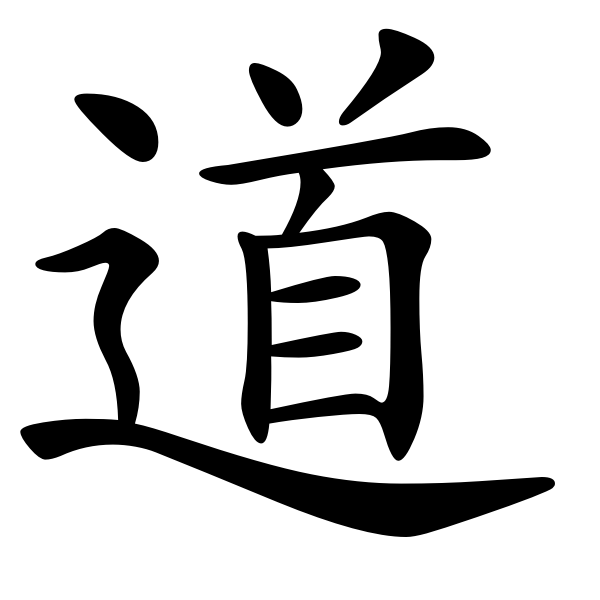
The Tao Te Ching, along with the Zhuangzi, is a fundamental text for both philosophical and religious Taoism. It also strongly influenced other schools of Chinese philosophy and religion, including Legalism, Confucianism, and Chinese Buddhism, which was largely interpreted through the use of Taoist words and concepts when it was originally introduced to China. Many artists, including poets, painters, calligraphers, and gardeners, have used the Tao Te Ching as a source of inspiration. Its influence has spread widely outside East Asia and it is among the most translated works in world literature.
The Tao Te Ching is ascribed to Lao Tzu, whose historical existence has been a matter of scholarly debate. … The first reliable reference to Lao Tzu is his “biography” in the Records of the Grand Historian, by Chinese historian Sima Qian (c. 145–86 BC), which combines three stories. In the first, Lao Tzu was a contemporary of Confucius (551–479 BC). His surname was Li (李 “plum”), and his personal name was Er (耳 “ear”) or Dan (聃 “long ear”). He was an official in the imperial archives, and wrote a book in two parts before departing to the West; at the request of the keeper of the Han-ku Pass, Yinxi, Lao Tzu composed the Tao Te Ching. In the second story, Lao Tzu, also a contemporary of Confucius, was Lao Laizi (老莱子 “Old Come Master”), who wrote a book in 15 parts. Third, Lao Tzu was the grand historian and astrologer Lao Dan (老聃 “Old Long-ears”), who lived during the reign (384–362 BC) of Duke Xian of Qin (秦獻公).
Source: Wikipedia, Tao te Ching
1
The tao that can be described
is not the eternal Tao.
The name that can be spoken
is not the eternal Name.
The nameless is the boundary of Heaven and Earth.
The named is the mother of creation.
Freed from desire, you can see the hidden mystery.
By having desire, you can only see what is visibly real.
Yet mystery and reality
emerge from the same source.
This source is called darkness.
Darkness born from darkness.
The beginning of all understanding.
2
When people see things as beautiful,
ugliness is created.
When people see things as good,
evil is created.
Being and non-being produce each other.
Difficult and easy complement each other.
Long and short define each other.
High and low oppose each other.
Fore and aft follow each other.
Therefore the Master
can act without doing anything
and teach without saying a word.
Things come her way and she does not stop them;
things leave and she lets them go.
She has without possessing,
and acts without any expectations.
When her work is done, she take no credit.
That is why it will last forever.
3
If you overly esteem talented individuals,
people will become overly competitive.
If you overvalue possessions,
people will begin to steal.
Do not display your treasures
or people will become envious.
The Master leads by
emptying people’s minds,
filling their bellies,
weakening their ambitions,
and making them become strong.
Preferring simplicity and freedom from desires,
avoiding the pitfalls of knowledge and wrong action.
For those who practice not-doing,
everything will fall into place.
4
The Tao is like an empty container:
it can never be emptied and can never be filled.
Infinitely deep, it is the source of all things.
It dulls the sharp, unties the knotted,
shades the lighted, and unites all of creation with dust.
It is hidden but always present.
I don’t know who gave birth to it.
It is older than the concept of God.
5
Heaven and Earth are impartial;
they treat all of creation as straw dogs.
The Master doesn’t take sides;
she treats everyone like a straw dog.
The space between Heaven and Earth is like a bellows;
it is empty, yet has not lost its power.
The more it is used, the more it produces;
the more you talk of it, the less you comprehend.
It is better not to speak of things you do not understand.
6
The spirit of emptiness is immortal.
It is called the Great Mother
because it gives birth to Heaven and Earth.
It is like a vapor,
barely seen but always present.
Use it effortlessly.
7
The Tao of Heaven is eternal,
and the earth is long enduring.
Why are they long enduring?
They do not live for themselves;
thus they are present for all beings.
The Master puts herself last;
And finds herself in the place of authority.
She detaches herself from all things;
Therefore she is united with all things.
She gives no thought to self.
She is perfectly fulfilled.
8
The supreme good is like water,
which benefits all of creation
without trying to compete with it.
It gathers in unpopular places.
Thus it is like the Tao.
The location makes the dwelling good.
Depth of understanding makes the mind good.
A kind heart makes the giving good.
Integrity makes the government good.
Accomplishment makes your labors good.
Proper timing makes a decision good.
Only when there is no competition
will we all live in peace.
9
It is easier to carry an empty cup
than one that is filled to the brim.
The sharper the knife
the easier it is to dull.
The more wealth you possess
the harder it is to protect.
Pride brings its own trouble.
When you have accomplished your goal
simply walk away.
This is the path way to Heaven.
 Via Perennis