

It is hard to think of a Western equivalent of t’ai chi chuan. Part dance, part physical exercise, and part slow-motion combat, it is nevertheless none of these but “T’ai chi exemplifies the most subtle principle of Taoism, known as wu-wei…to act without forcing -to move in accordance with the flow of nature’s course…and is best understood from watching the dynamics of water” (Huang [1] pg.2).
Alan Watts, Tao The Watercourse Way
My exposure to Tai chi chuan began in the late 1980s and early 1990s in California. I was fortunate to meet my teacher hanging around a local park, where it quickly became evident in watching him practice the form that his study and application of the art had gone very deep. A group of us petitioned him to begin teaching us weekly in the park, and a rewarding association began.
Tai chi chuan is a martial art closely related to qi gong. It cultivates inner poise, balance, focus of attention, presence of mind, and the well-known slow and deliberate movements of the form for which Tai chi is known. My teacher always stressed the flow of chi in the class and how the movements of the form should be smoothly connected to one another so as not to disrupt the flow of chi, but for several years I had to take it on faith that chi existed. I never felt it in the early days of practice. It was only after I moved away to attend graduate school that this occurred, and curiously, it was not in response to practice, but as a result of watching a video my teacher produced of the long form sequence, with its slow and graceful movements, dappled light through the trees, and a rich meditative background soundscape of ambient nature sounds in the park. Gradually, I became aware that my breathing had slowed, my brain had switched to an alpha state, and then – there was a distinct tingling in both of my palms that persisted as long as I watched the video. The chi was flowing and perceptible to me, at long last. After 2001, chi and other forms of body energy were much more perceptible to me in many different circumstances, and frequently encountered. We, the chi and I, are now, if not old friends, certainly very familiar acquaintances. It works best for the acquaintance when stillness and quiet is cultivated; these are the ideal conditions for chi to emerge.
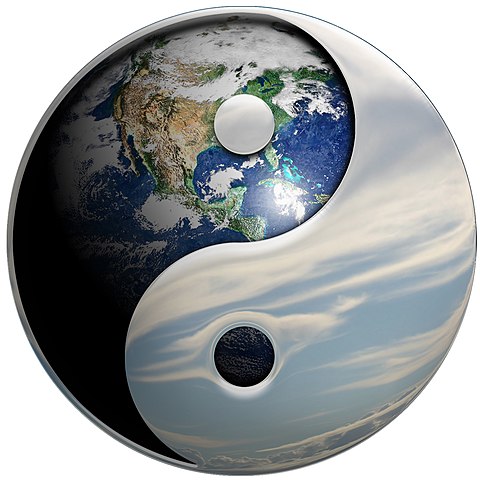
Tai chi (simplified Chinese: 太极; traditional Chinese: 太極; pinyin: Tàijí), short for T’ai chi ch’üan or Tàijíquán (太極拳), sometimes also known as “Shadowboxing”, is an internal Chinese martial art practiced for defense training, health benefits, and meditation. Tai chi has practitioners worldwide.
Yang Shaohou, Yang Chengfu, Wu Chien-ch’üan and Sun Lutang promoted the art for its health benefits beginning in the early 20th century. Its global following may be attributed to overall benefit to personal health.
Many forms are practiced, both traditional and modern. Most modern styles trace their development to the five traditional schools: Chen, Yang, Wu (Hao), Wu, and Sun. All trace their historical origins to Chen Village.
Yin and yang
The concept of the taiji (“Supreme Ultimate”), in contrast with wuji (“without ultimate”), appears in both Taoist and Confucian philosophy, where it represents the fusion or mother of yin and yang into a single ultimate, represented by the taijitu symbol Taijitu – Small (CW).svg. Tai chi theory and practice evolved in agreement with Chinese philosophical principles, including those of Taoism and Confucianism. Zou Yan (鄒衍; 305 BC – 240 BC) was a Chinese philosopher best known as the representative thinker of the Yin and Yang School (or School of Naturalists) during the Hundred Schools of Thought era in Chinese philosophy.
Taijiquan is a complete martial art system with a full range of bare-hand movement set and weapon forms as in the Taiji sword and Taiji spear based on the dynamic relationship between Yin and Yang.
While tai chi is typified by its slow movements, many styles (including the three most popular: Yang, Wu and Chen) have secondary, faster-paced forms. Some traditional schools teach partner exercises known as tuishou (“pushing hands”), and martial applications of the postures of different forms (taolu).
Internal vs external
In China, tai chi is categorized under the Wudang grouping of Chinese martial arts—that is, arts applied with internal power. Although the term Wudang suggests these arts originated in the Wudang Mountains, it is used only to distinguish the skills, theories and applications of neijia (internal arts) from those of the Shaolin grouping, or waijia (hard or external) styles.
Due to the historical context in which tai chi was introduced to the Manchu imperial prince, the cultivation and practice of tai chi have been enumerated by the literati court ministers and even a poem written by one of the Manchu princes’ private tutors praising the founder of Yang family tai chi. And in the “T’ai-chi classics”, writings by tai chi masters. The physiological and kinesiological aspects of the body’s movements are characterized by the circular motion and rotation of the pelvis, based on the metaphors of the pelvis as the hub and the arms and feet as the spokes of a wheel. Furthermore, the respiration of breath is coordinated with the physical movements in a state of deep relaxation, rather than muscular tension, in order to guide the practitioners’ to a state of homeostasis.
Practice
Meditation: The focus and calm cultivated by the meditative aspect of tai chi is seen as necessary for maintaining health (in the sense of relieving stress and maintaining homeostasis) and in the application of the form as a soft style martial art.
Movement: Tai chi is the practice of appropriate change in response to outside forces, of yielding to and redirecting an attack rather than meeting it with opposing force. Physical fitness is an important step towards effective self-defense.
Tai chi training involves five elements:
- taolu (solo hand and weapons routines/forms)
- neigong and qigong (breathing, movement and awareness exercises and meditation)
- tuishou (Push Hands drills)
- sanshou (Striking techniques).
History
Tai chi’s formative influences came from Taoist and Buddhist monasteries, as recounted in legend. Nevertheless, some schools claim that tai chi sprang from the theories of Song dynasty Neo-Confucianism (synthesis of Taoist, Buddhist, and Confucian traditions, especially the teachings of Mencius).[9] These schools believe that tai chi theory and practice were formulated by Taoist monk Zhang Sanfeng in the 12th century, at about the same time that the principles of the Neo-Confucian school were rising.[9]
However, modern research doubts those claims, pointing out that a 17th-century piece called Epitaph for Wang Zhengnan (1669), composed by Huang Zongxi (1610–1695), is the earliest reference indicating a connection between Zhang Sanfeng and martial arts. Claims of connections between tai chi and Zhang Sanfeng appeared no earlier than the 19th century.
Yang Luchan trained with the Chen family for 18 years before he started to teach in Beijing, which strongly suggests that his work was heavily influenced by the Chen family art. The Chen family trace their art back to Chen Wangting in the 17th century. Martial arts historian Xu Zhen claimed that the tai chi of Chen Village was influenced by the Taizu changquan style practiced at nearby Shaolin Monastery, while Tang Hao thought it was derived from a treatise by Ming dynasty general Qi Jiguang, Jixiao Xinshu (“New Treatise on Military Efficiency”), which discussed several martial arts styles including Taizu changquan.
What is now known as tai chi appears to have received this appellation around the mid-19th century.Imperial Court scholar Ong Tong witnessed a demonstration by Yang Luchan before Yang had established his reputation as a teacher. Afterwards Ong wrote: “Hands holding Tai chi shakes the whole world, a chest containing ultimate skill defeats a gathering of heroes.” Before this time the art may have had other names, and appears to have been generically described by outsiders as zhan quan (沾拳, “touch boxing”), Mian Quan (“soft boxing”) or shisan shi (十三式, “the thirteen techniques”).
Styles
The five major styles of tai chi are named for the Chinese families who originated them:
- Chen style (陳氏) of Chen Wangting (1580–1660)
- Yang style (楊氏) of Yang Luchan (1799–1872)
- Wu Hao style (武氏) of Wu Yuxiang (1812–1880)
- Wu style (吳氏) of Wu Quanyou (1834–1902) and his son Wu Jianquan (1870–1942)
- Sun style (孫氏) of Sun Lutang (1861–1932)
The most popular is Yang, followed by Wu, Chen, Sun and Wu/Hao.[9] The styles share underlying theory, but their training differs.
Dozens of new styles, hybrid styles, and offshoots followed, although the family schools are accepted as standard by the international community. Other important styles are Zhaobao tàijíquán, a close cousin of Chen style, which is recognized by Western practitioners; Fu style, created by Fu Chen Sung, which evolved from Chen, Sun and Yang styles, and incorporates movements from Baguazhang (Pa Kua Chang)[citation needed]; and Cheng Man-ch’ing style which simplifies Yang style.
Most existing styles came from Chen style, which had been passed down as a family secret for generations. The Chen family chronicles record Chen Wangting, of the family’s 9th generation, as the inventor of what is known today as tai chi. Yang Luchan became the first person outside the family to learn tai chi. His success in fighting earned him the nickname Yang Wudi, which means “Abnormally Large”, and his fame and efforts in teaching greatly contributed to the subsequent spreading of tai chi knowledge.[citation needed] The designation internal or neijia martial arts is also used to broadly distinguish what are known as external or waijia styles based on Shaolinquan styles, although that distinction may be disputed by modern schools. In this broad sense, all styles of t’ai chi, as well as related arts such as Baguazhang and Xingyiquan, are, therefore, considered to be “soft” or “internal” martial arts.
Source: Wikipedia Tai chi
I was trained in the Wu style short and long forms of tai chi. This style is more contained and less flamboyant than some of the other styles of tai chi; it emphasizes small circular movements and a steadily decreasing presentation – the longer one has been in practice, the more the movements become internalized and subtle. The following is a short video of one version of the Wu style short form.
 Via Perennis