

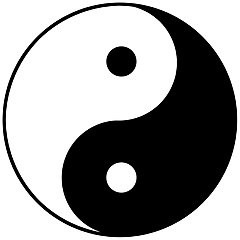
Qi Gong is a set of movement practices for health deriving from the Chinese philosophy of Taoism. Taoism dates from the 4th to 6th centuries BCE and is based upon the writings of Lao Tzu, an enigmatic hermit-sage. From his simple and elegant work Dao de Jing, an entire worldview took root and grew, including philosophy, medical practices (Tui Na and acupuncture among them), internal alchemy, spiritual cultivation and growth, martial arts, and health and energy exercises like Qi Gong. In Taoist theory, the cosmos is perceived as an eternal flow between polarities of yin (feminine, soft, yielding, receptive, “dark”, ambiguous) and yang (masculine, hard, assertive, giving, “light”, definitive). From the interplay of these constituents, both of which are found in varying degrees in all creations, all subsequent refinements and new developments come forth.
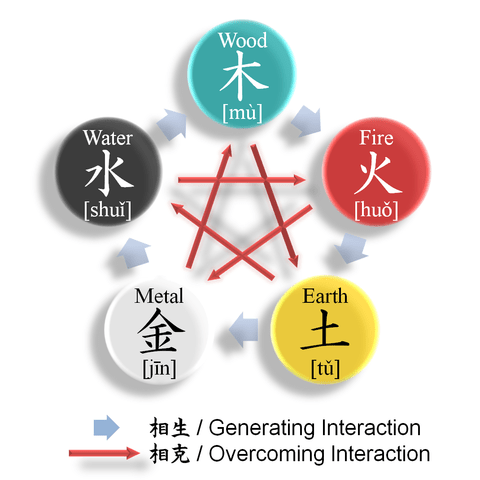
To understand Chinese medical theory and by extension qi gong, one must begin to apprehend that it is at root based on an energy perspective. Human beings have what is known as a meridian system – an invisible energetic circulatory system separate from the body’s physiologic circulatory and nervous systems. Chinese medical practitioners have spent thousands of years meticulously mapping out this meridian system, identifying the various major meridians and the individual points on each meridian, as well as tracking health improvements and declines based on flows or blockages in these meridians. Most meridians have a major organ they are associated with. Taoist thought has further characterized energy (chi or qi) into five different classes, comprised of the five elements – Wood, Fire, Metal, Water, and Earth. Each class has its own characteristics and interplays with other elements, and meridians are grouped into one of the five elements.
Health is perceived as the free flow and balance of all energies in the body. Qi Gong is similar to an energetic form of calisthenics, only with a much more subdued and elegant presentation. The focus of qi gong is to gently stimulate, strengthen and balance the flow of energies in each of the body’s meridians. Tai chi chuan, covered in an additional page on this site, was originally a form of qi gong that developed further specifically as a form of martial art or self-defense. To this day, one can see groups of people doing forms of qi gong or tai chi chuan in parks in China. Though it may appear from Western standards that proof is lacking for the claims of improved health and vitality (see my blog post on energy medicine and Western science in general), a regular practice of qi gong or tai chi leaves on feeling refreshed, revitalized, and peaceful.
Qigong (also spelled chi kung, or chi gung) is a Chinese word that means “life energy cultivation”, and is a body-mind exercise for health, meditation, and martial arts training. It typically involves slow body movement, inner focus, and regulated breathing. Traditionally it was practiced and taught in secrecy in the Chinese Buddhist, Taoist and Confucianist traditions. In the 20th century, Qigong movement has incorporated and popularized Daoist meditation, and “mainly employs concentrative exercises but also favors the circulation of energy in an inner-alchemical mode” (Kohn 2008a:120).
….Qigong meditation may be more attractive to people that like to integrate a more active body and energy work into the practice. If seated meditation is unbearable for you, and you prefer something a bit more active, try some of the more dynamic forms of Qigong. …Giovanni Dientsmann, Live and Dare
Some people have a taste of dynamic Qigong through the practice of Tai Chi….
There are thousands of different Qigong exercises cataloged, involving over 80 different types of breathing. Some are specific to martial arts (to energize and strengthen the body); others are for health (to nourish body functions or cure diseases); and others for meditation and spiritual cultivation. Qigong can be practiced in a static position (seated or standing), or through a dynamic set of movements…
In its most refined form, Qi Gong becomes a beautiful form of moving meditation. There are not many such meditations out there providing a body-based meditative experience; only yoga comes to mind, and the poses in yoga are generally static ones, with little or no movement incorporated. In my experience, I’ve found that a physical component to a spiritual practice is a vitally important element, one not to be overlooked, and one that can encourage deeper incarnation of spiritual energies invoked in one’s experience. Qi gong is excellent for grounding and transmuting spiritual energies.
There are many different forms of qi gong to choose from. Provided below are a couple of clips of beginner exercise sets that can begin to give on a taste of the exercises.
Ji Ben Qi Gong:
Five Element Qi Gong:
 Via Perennis