

The expression of spirit in this materially manifest world can occur in any of a number of ways. Some of the most satisfying and grounding ways occur in physical practices. These tend to clarify and settle the mind, better integrate one’s physical presence in the world with the environment/matrix in which the body-mind moves, and allow for deeper incarnations and expression of spiritual energy in and through the body.
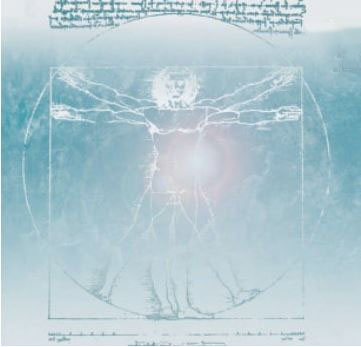
The majority of spiritual traditions ignore the body or treat it as an obstacle to be overcome, or as an impediment blocking progress as one works towards salvation or enlightenment. The human is considered as a soul or a monad of spirit, while the body is merely a temporary husk carried along for the duration of the journey here on Earth. This attitude can lead to any number of less than desirable outcomes – disdain for the body leading even to disgust or hatred, with implications extending to the larger body in which we inhere, the vestures of the environment here on our home planet; a fundamental unease stemming from an alienation from the conscious substance – the flesh – in which we are embedded, and a deepening of the already sizable rift between the mind and the body in human experience. Furthermore, such attitudes likely lead to poorer health outcomes over the long term, as one’s well-being in the body cannot flourish if one’s roots are stationed in an always slightly toxic soup of negative ideas and attitudes towards the flesh. Additionally, such perspectives can deepen the archetypal splits between genders and further the unfortunate unconscious hierarchical power discrepancies in our society, as there are deep connections between the body and the Divine Feminine. By an additional unbalanced empowerment of the active mind (typically associated with the animus or inner masculine), the Feminine continues to be subjugated and further devalued.
There are exceptions to this general rule of traditions ignoring the body. Branches of Indian Hinduism incorporate physical disciplines in their spiritual practice – pranayama, or controlled/regulated breathing is one such practice, and hatha yoga another. This is the yoga as is typically perceived and practiced in the West. Tantric Hinduism also brings a focus onto the body, usually and mistakenly apprehended as solely focused on sexual pleasure, but in its more holistic aspect, Tantra brings attention into the body through the senses more broadly and into this material world in particular, using the everyday embodied experiences of human life as gateways into the Beyond. Taoism is particularly good in this respect, as it broadly conceives of a spirituality centered in the here-and-now, in this world and not divorced from it. From Taoism, we see the practices of Tai Chi Chuan and Qi Gong arising and flourishing. As moving meditations, they not only focus attention, develop and deepen it in the body, but they add the element of movement as well, allowing for the spiritual energy to express in rare forms. One who has watched the skilled performance of Tai Chi and Qi Gong forms cannot help but be awed and brought to an inner stillness and raptness by that expression. There is something of the Holy being born in this dimension by these moving meditations.
These are the practices that I have at least a passing familiarity with, but there are others as well. Dancing, particularly when spontaneously performed, can tap into these dimensions and become a spiritual practice. Surfers and skiers regularly speak in glowing terms of their sports and how they allow participants to briefly commune with a greater Flow, a transcendent experience of oneness between the forces and matrices of the natural world and one’s own personal dance with those forces through activity. Windsurfing and sailing can also bring one to the doorstep of these experiences. One of my formative experiences in my early twenties occurred during an afternoon of rock-climbing after a fall on a difficult pitch; in the subsequent attempt, I was taken up suddenly by an Ease and – there’s no other way to describe it – a Superpower, though temporary, that allowed me to effortlessly and joyfully scale a cliff that moments before had been, if not impossible, highly complex and difficult for me. That was a memorable moment of spiritual Rapture imprinted on my heart, made possible through a physical discipline being pursued for pleasure and its (unconsciously-apprehended) growth potential. It provided a doorway for the powers and potentialities of the Spirit to enter this dimension and express, and in that expression, when it happens, invariably, there is Joy.
For a long time, I wavered on the fence between these two schools of thought: body-denial and the spiritual goal of complete transcendence, or body acceptance and wholeness/expression in the world. My Christian upbringing predisposed me, as it does for many, with a mindset that the body was meant to be overcome and subjugated in the pursuit of the kingdom of heaven. Had I been reading the signs more carefully from early on, there would have been no indecisiveness. The Joy invoked and felt in these and other rhapsodic physical experiences, whether subtle and caressing as in Qi Gong, or exultant and overwhelming as in my climbing rapture, is and always has been the sanction and authorization of this path; for some fortunate ones, choosing wholeness, conscious embodiment, and physical expression in this world is blessed and validated from On High, and therefore indicated as a primary element or path in one’s journey if one is so temperamentally predisposed.
Closely related to what has been said here for physical disciplines is the realm of bodywork. Here, too, the body is being used as an instrument and a medium to express Spirit in this world, the difference being an objective of establishing a relationship with another in the furtherance of health improvement or personal well-being goals. But the same fundamental orientations and considerations apply to both physical practices and bodywork. An entire section has been devoted to bodywork here.
Recently, I had a conversation with Richard Moss about these topics. His insights, coming from a stance of complete wakefulness where there is no further need to use physical practices to aid in awakening, are shared below. My perspective and his, though intimately related, look a little different depending upon whether one’s journey is complete (as his is) or is still in process (as mine is). But the familial affinities and interrelatedness of these perspectives are clear to see and trace throughout.
I encourage you to find the physical discipline that resonates for you and incorporate that into your spiritual practice. Feeling the Joy that can potentially be invoked is one of the primary attractors and reasons to keep at it; it will keep one pursuing and engaging in a physical practice again and again, deepening and refining your spiritual experience in this dimension.
Related Pages
- Qi Gong
- Tai Chi Chuan
- Inner Core Meditation
- Body Work: Polarity Therapy
- Body Work: CranialSacral Therapy
- Body Work: Massage Therapy
Further Resources
- Bone Games: One Man’s Search for the Ultimate Athletic High, Rob Schultheis. An interesting read on transcendent experiences in outdoor sports and pastimes.
- Flow: The Psychology of Optimal Experience, Mihaly Csikszentmihalyi. Fascinating read on the joys of activity. Chapter 5 – The Body in Flow – is particularly relevant to the discussion here.
 Via Perennis