

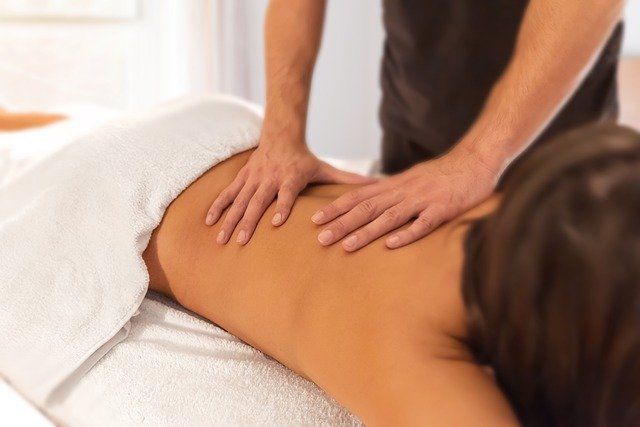
In the early 1990s, I was laid low by a malady that sapped my energy to an extreme degree and went undiagnosed for five or six years. I was unable to keep a regular exercise regimen, as I had until that time, as I barely had enough energy to shuffle through an office work day. Fortunately, I was already a client of an excellent massage therapist, who treated me on a weekly to bi-weekly basis with Swedish massage sessions. As it turned out, I found out several years later that I had been poisoned with heavy metals somewhere along the way – uranium and zinc among others, and two sets of chelation therapy in 1998 set me right physically. In looking back, I came to realize that the massage sessions kept me sane and in touch with my body through the period when I was most struggling with physical fatigue and ill-health. I have continued to receive massage therapy sessions over the past 22 years, and the account of my transitional event includes a narrative of how my therapist at that time played a vital and critical role in grounding me and providing some professional emotional care at the same time.
The following benefits are reasons to seek out professional massage therapy:
For healthy people: wellness, relaxation, revitalization, improved immune system function
Massage and Its Benefits, https://www.massagetherapy.com/massage-and-its-benefits
While most research is conducted in the context of illnesses or conditions, some studies have looked at bodywork for healthy people, and concluded that massage therapy for wellness or for stress relief is consistently effective in a variety of ways. Even a simple hand massage appears to move healthy people into a relaxed state (Kunikata). A comparison of traditional Swedish massage and Thai massage found that Swedish massage produced stronger relaxation responses and improved sleep, while Thai massage led to a sense of energy and revitalization (MacSween). Improvements in immune system function, along with reductions in stress-related hormones have been found as well (Barreto, Lovas, Rapaport). …
For mental and emotional well-being: improved symptoms for anxiety and depression
Massage therapy has a surprisingly robust body of evidence showing benefits for people with depression, anxiety, posttraumatic stress disorder (PTSD), and other mood-related challenges. Much of this research has been done in settings where depression, anxiety, and stress are part of a larger health picture (such as among hospital patients, or in the context of chronic pain), although one study looked at the effects of massage therapy on 70 women diagnosed with anxiety and depression who underwent a month of spa treatments; not surprisingly, their stress-related hormones and other biochemical changes suggested that massage can be helpful in this circumstance (Bicikova).
Depression
Several studies found massage therapy benefits for people living with depression, both as a freestanding disorder and as a part of a complicated health situation. A systematic review found that aromatherapy massage was substantially more effective than aromatherapy alone for this population (Sánchez-Vidaña). One study found clearly better results for people with major depressive disorder receiving Swedish massage compared to a sham treatment (Hohl). This is important because it helps to delineate between the effect of the bodywork, and the positive effect of spending time with an attentive caregiver. Both are useful, but in this situation the massage was more powerful.
Anxiety
Anxiety can be a freestanding disorder that radically impairs a person’s quality of life. It can also develop as a part of a complicated health challenge. In either case, welcomed touch in the form of massage therapy has been seen to be an effective treatment component. Results show it can be effective for patients with generalized anxiety disorder (Rapaport). It was also seen to decrease anxiety scores in hospital settings (Cutshall), and among caregivers of patients with cancer (Pinar). Massage with and without aromatherapy improved anxiety among patients in palliative care (Hsu) and in those receiving dialysis (Bullen).
An additional reason to seek out massage therapy: curtailing the effects of touch starvation. In much of today’s Western culture, touch starvation, particularly for some groups of people (the elderly, the chronically-ill, people struggling with anxiety and depression) is endemic. Research has shown repeatedly that not being touched leads to so-called touch starvation, which can affect blood pressure, heart rates, and lead to feelings of being isolated, finally resulting in depression, stress, anxiety, and a range of psychosomatic disorders, or even worse, resulting in post-traumatic stress disorder, suicidal thoughts, or actual suicide attempts. Regular massage therapy, or even smaller doses, such as a hand massage, can work wonders in releasing oxytocin, dopamine, and other feel-good hormones vital for human beings to experience for improved physical health and mental well-being.
What does massage therapy have to do with a spiritual path? Quite a bit, if you subscribe to the notion, as I do, that the human body needs to be included in a spiritual practice. Incarnate is defined as “ invested with bodily and especially human nature and form (Merriam-Webster).” As “incarnation” is a description applied to the state of each one of our tenures here in this material dimension, it follows that the body and its sensate/felt experience of reality on this plane of existence is an integral and arguably indispensable component of a spiritual practice. In my view, ignoring or disregarding it in spiritual practice is ignoring the most fundamental awareness we have here on Planet Earth. The body is an unambiguous and concrete base to work from and our constant medium of encounter with the material world on a daily basis. As such, it can serve as an evergreen, eternally-renewing touchstone in the present in deepening our encounter, not only with the material dimension itself, but with our inner experience of encountering the material dimension. Assuming attentiveness and centeredness in consciousness is adopted as the state of reception, that sounds like a central element of spiritual practice to me.
If you have never treated yourself to a therapeutic massage session, I invite you to do so. Massage encourages you to gather yourself inwardly, the sine qua non of further spiritual exploration; it develops your ability to be centered, present, and truly inhabiting your body. The well-being you will experience afterwards is a feeling you’ll want to revisit time and again.
 Via Perennis