

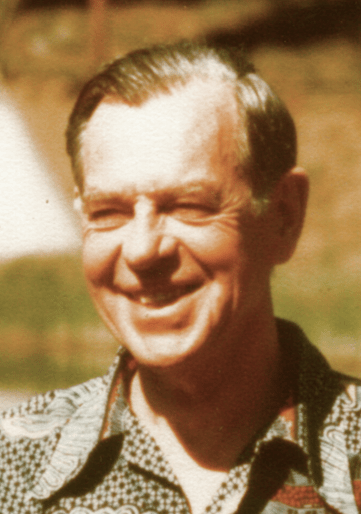
The influence of Joseph Campbell on the public’s understanding of mythology in the 20th century cannot be overstated. It is not an exaggeration to state that he single-handedly elevated the understanding of millions of Americans on the proper role and understanding of myth and metaphor during his life as an educator, speaker, and author, but perhaps none so significantly as in his interview series with Bill Moyers on The Power of Myth in 1987. His work in comparative mythology dovetailed closely with Carl Jung’s psychoanalytic work, though the two were probably at best only peripherally aware of each other during Jung’s lifetime, and helped to illustrate that the human psyche was one across cultures and eras; the myths might take different forms appropriate to their cultures of origin, but the underlying themes and structures were remarkably similar. Campbell was asked to write the forward to The Portable Jung in the early 1970s, a tacit acknowledgement of how closely the men’s works illustrated one another’s assertions.
Joseph John Campbell (March 26, 1904 – October 30, 1987) was an American writer. He was a professor of literature at Sarah Lawrence College who worked in comparative mythology and comparative religion. His work covers many aspects of the human experience. Campbell’s best-known work is his book The Hero with a Thousand Faces (1949), in which he discusses his theory of the journey of the archetypal hero shared by world mythologies, termed the monomyth.
Since the publication of The Hero with a Thousand Faces, Campbell’s theories have been applied by a wide variety of modern writers and artists. His philosophy has been summarized by his own often repeated phrase: “Follow your bliss.” He gained recognition in Hollywood when George Lucas credited Campbell’s work as influencing his Star Wars saga.
Comparative mythology and Campbell’s theories
Monomyth
Campbell’s concept of monomyth (one myth) refers to the theory that sees all mythic narratives as variations of a single great story. The theory is based on the observation that a common pattern exists beneath the narrative elements of most great myths, regardless of their origin or time of creation. Campbell often referred to the ideas of Adolf Bastian and his distinction between what he called “folk” and “elementary” ideas, the latter referring to the prime matter of monomyth while the former to the multitude of local forms the myth takes in order to remain an up-to-date carrier of sacred meanings. The central pattern most studied by Campbell is often referred to as the hero’s journey and was first described in The Hero with a Thousand Faces (1949). An enthusiast of novelist James Joyce, Campbell borrowed the term monomyth from Joyce’s Finnegans Wake. Campbell also made heavy use of Carl Jung’s theories on the structure of the human psyche, and he often used terms such as anima, animus and ego consciousness.
As a strong believer in the psychic unity of mankind and its poetic expression through mythology, Campbell made use of the concept to express the idea that the whole of the human race can be seen as engaged in the effort of making the world “transparent to transcendence” by showing that underneath the world of phenomena lies an eternal source which is constantly pouring its energies into this world of time, suffering, and ultimately death. To achieve this task one needs to speak about things that existed before and beyond words, a seemingly impossible task, the solution to which lies in the metaphors found in myths. These metaphors are statements that point beyond themselves into the transcendent. The Hero’s Journey was the story of the man or woman who, through great suffering, reached an experience of the eternal source and returned with gifts powerful enough to set their society free.
As this story spread through space and evolved through time, it was broken down into various local forms (masks), depending on the social structures and environmental pressures that existed for the culture that interpreted it. The basic structure, however, has remained relatively unchanged and can be classified using the various stages of a hero’s adventure through the story, stages such as the Call to Adventure, Receiving Supernatural Aid, Meeting with the Goddess/Atonement with the Father and Return. These stages, as well as the symbols one encounters throughout the story, provide the necessary metaphors to express the spiritual truths the story is trying to convey. Metaphors for Campbell, in contrast with similes which make use of the word like, pretend to a literal interpretation of what they are referring to, as in the sentence “Jesus is the Son of God” rather than “the relationship of man to God is like that of a son to a father”.
In the 2000 documentary Joseph Campbell: A Hero’s Journey, he explains God in terms of a metaphor:
God is a metaphor for a mystery that absolutely transcends all human categories of thought, even the categories of being and non-being. Those are categories of thought. I mean it’s as simple as that. So it depends on how much you want to think about it. Whether it’s doing you any good. Whether it is putting you in touch with the mystery that’s the ground of your own being. If it isn’t, well, it’s a lie. So half the people in the world are religious people who think that their metaphors are facts. Those are what we call theists. The other half are people who know that the metaphors are not facts. And so, they’re lies. Those are the atheists.
Functions of myth
Campbell often described mythology as having a fourfold function within human society. These appear at the end of his work The Masks of God: Creative Mythology, as well as various lectures.
The Mystical/Metaphysical Function
Awakening and maintaining in the individual a sense of awe and gratitude before the ‘mystery of being’ and his or her participation in it
According to Campbell, the absolute mystery of life, what he called transcendent reality, cannot be captured directly in words or images. Symbols and mythic metaphors on the other hand point outside themselves and into that reality. They are what Campbell called “being statements” and their enactment through ritual can give to the participant a sense of that ultimate mystery as an experience. “Mythological symbols touch and exhilarate centers of life beyond the reach of reason and coercion…. The first function of mythology is to reconcile waking consciousness to the mysterium tremendum et fascinans of this universe as it is.”
The Cosmological Function
Explaining the shape of the universe
For pre-modern societies, myth also functioned as a proto-science, offering explanations for the physical phenomena that surrounded and affected their lives, such as the change of seasons and the life cycles of animals and plants.
The Sociological Function
Validate and support the existing social order
Ancient societies had to conform to an existing social order if they were to survive at all. This is because they evolved under “pressure” from necessities much more intense than the ones encountered in our modern world. Mythology confirmed that order and enforced it by reflecting it into the stories themselves, often describing how the order arrived from divine intervention. Campbell often referred to these “conformity” myths as the “Right Hand Path” to reflect the brain’s left hemisphere’s abilities for logic, order and linearity. Together with these myths however, he observed the existence of the “Left Hand Path”, mythic patterns like the “Hero’s Journey” which are revolutionary in character in that they demand from the individual a surpassing of social norms and sometimes even of morality.
The Pedagogical/Psychological Function
Guide the individual through the stages of life
As a person goes through life, many psychological challenges will be encountered. Myth may serve as a guide for successful passage through the stages of one’s life.
Works by Campbell
Early collaborations
The first published work that bore Campbell’s name was Where the Two Came to Their Father (1943), an account of a Navajo ceremony that was performed by singer (medicine man) Jeff King and recorded by artist and ethnologist Maud Oakes, recounting the story of two young heroes who go to the hogan of their father, the Sun, and return with the power to destroy the monsters that are plaguing their people. Campbell provided a commentary. He would use this tale through the rest of his career to illustrate both the universal symbols and structures of human myths and the particulars (“folk ideas”) of Native American stories.
As noted above, James Joyce was an important influence on Campbell. Campbell’s first important book (with Henry Morton Robinson), A Skeleton Key to Finnegans Wake (1944), is a critical analysis of Joyce’s final text Finnegans Wake. In addition, Campbell’s seminal work, The Hero with a Thousand Faces (1949), discusses what Campbell called the monomyth – the cycle of the journey of the hero – a term that he borrowed directly from Joyce’s Finnegans Wake.
The Hero with a Thousand Faces
From his days in college through the 1940s, Joseph Campbell turned his hand to writing fiction. In many of his later stories (published in the posthumous collection Mythic Imagination) he began to explore the mythological themes that he was discussing in his Sarah Lawrence classes. These ideas turned him eventually from fiction to non-fiction.
Originally titled How to Read a Myth, and based on the introductory class on mythology that he had been teaching at Sarah Lawrence College, The Hero with a Thousand Faces was published in 1949 as Campbell’s first foray as a solo author; it established his name outside of scholarly circles and remains, arguably, his most influential work to this day. The book argues that hero stories such as Krishna, Buddha, Apollonius of Tyana, and Jesus all share a similar mythological basis. Not only did it introduce the concept of the hero’s journey to popular thinking, but it also began to popularize the very idea of comparative mythology itself – the study of the human impulse to create stories and images that, though they are clothed in the motifs of a particular time and place, draw nonetheless on universal, eternal themes. Campbell asserted:
Wherever the poetry of myth is interpreted as biography, history, or science, it is killed. The living images become only remote facts of a distant time or sky. Furthermore, it is never difficult to demonstrate that as science and history, mythology is absurd. When a civilization begins to reinterpret its mythology in this way, the life goes out of it, temples become museums, and the link between the two perspectives becomes dissolved.
The Masks of God
Published between 1959 and 1968, Campbell’s four-volume work The Masks of God covers mythology from around the world, from ancient to modern. Where The Hero with a Thousand Faces focused on the commonality of mythology (the “elementary ideas”), the Masks of God books focus upon historical and cultural variations the monomyth takes on (the “folk ideas”). In other words, where The Hero with a Thousand Faces draws perhaps more from psychology, the Masks of God books draw more from anthropology and history. The four volumes of Masks of God are as follows: Primitive Mythology, Oriental Mythology, Occidental Mythology, and Creative Mythology.
The book is quoted by proponents of the Christ myth theory. Campbell writes, “It is clear that, whether accurate or not as to biographical detail, the moving legend of the Crucified and Risen Christ was fit to bring a new warmth, immediacy, and humanity, to the old motifs of the beloved Tammuz, Adonis, and Osiris cycles.”
Historical Atlas of World Mythology
At the time of his death, Campbell was in the midst of working on a large-format, lavishly illustrated series titled Historical Atlas of World Mythology. This series was to build on Campbell’s idea, first presented in The Hero with a Thousand Faces, that myth evolves over time through four stages:
The Way of the Animal Powers – the myths of Paleolithic hunter-gatherers which focus on shamanism and animal totems.
The Way of the Seeded Earth – the myths of Neolithic, agrarian cultures which focus upon a mother goddess and associated fertility rites.
The Way of the Celestial Lights – the myths of Bronze Age city-states with pantheons of gods ruling from the heavens, led by a masculine god-king.
The Way of Man – religion and philosophy as it developed after the Axial Age (c. 6th century BCE), in which the mythic imagery of previous eras was made consciously metaphorical, reinterpreted as referring to psycho-spiritual, not literal-historical, matters. This transition is evident in the East in Buddhism, Vedanta, and philosophical Taoism; and in the West in the Mystery cults, Platonism, Christianity and Gnosticism.
Only the first volume was completed at the time of Campbell’s death. Campbell’s editor Robert Walter completed the publication of the first three of five parts of the second volume after Campbell’s death. The works are now out of print. As of 2014, Joseph Campbell Foundation is currently undertaking to create a new, ebook edition.
The Power of Myth
Campbell’s widest popular recognition followed his collaboration with Bill Moyers on the PBS series The Power of Myth, which was first broadcast in 1988, the year following Campbell’s death. The series discusses mythological, religious, and psychological archetypes. A book, The Power of Myth, containing expanded transcripts of their conversations, was released shortly after the original broadcast.
Collected Works
The Collected Works of Joseph Campbell series is a project initiated by the Joseph Campbell Foundation to release new, authoritative editions of Campbell’s published and unpublished writing, as well as audio and video recordings of his lectures. Working with New World Library and Acorn Media UK, as well as publishing audio recordings and ebooks under its own banner, as of 2014 the project has produced over seventy-five titles. The series’s executive editor is Robert Walter, and the managing editor is David Kudler.
Other books
- Where the Two Came to Their Father: A Navaho War Ceremonial (1943). With Jeff King and Maud Oakes, Old Dominion Foundation
- The Flight of the Wild Gander: Explorations in the Mythological Dimension (1968). Viking Press
- Myths to Live By (1972). Viking Press
- Erotic irony and mythic forms in the art of Thomas Mann (1973; monograph, later included in The Mythic Dimension)
- The Mythic Image. Princeton University Press
- The Inner Reaches of Outer Space: Metaphor As Myth and As Religion (1986). Alfred van der Marck Editions
- Transformations of Myth Through Time (1990). Harper and Row
- A Joseph Campbell Companion: Reflections on the Art of Living (1991). Editor Robert Walter, from material by Diane K. Osbon
- Mythic Worlds, Modern Words: On the Art of James Joyce. Editor Edmund L. Epstein
- The Mythic Dimension: Selected Essays (1959–1987). Editor Anthony Van Couvering
- Baksheesh & Brahman: Indian Journals (1954–1955). Editors Robin/Stephen Larsen & Anthony Van Couvering
- Thou Art That: Transforming Religious Metaphor (2001). Editor Eugene Kennedy, New World Library ISBN 1-57731-202-3. First volume in the Collected Works of Joseph Campbell
- The Inner Reaches of Outer Space (2002).
- Sake & Satori: Asian Journals – Japan. Editor David Kudler
- Myths of Light: Eastern Metaphors of the Eternal. Editor David Kudler
- Pathways to Bliss: Mythology and Personal Transformation. Editor David Kudler
- Mythic Imagination: Collected Short Fiction of Joseph Campbell. ISBN 160868153X (2012)
- Goddesses: Mysteries of the Feminine Divine. ISBN 1608681823 (2013). Editor Safron Rossi
- Romance of the Grail: The Magic and Mystery of Arthurian Myth. Editor Evans Lansing Smith
- The Ecstasy of Being: Mythology and Dance. Editor Nancy Allison
- Correspondence 1927–1987 (2019, 2020). Editors Dennis Patrick Slattery & Evans Lansing Smith
Source: Wikipedia, Joseph Campbell
 Via Perennis
