

Filling the conscious mind with ideal conceptions is a characteristic of Western theosophy, but not the confrontation with the Shadow and the world of darkness. One does not become enlightened by imagining figures of light, but by making the darkness conscious. The latter procedure, however, is disagreeable and therefore not popular.
Carl G. Jung, Psychology and Alchemy
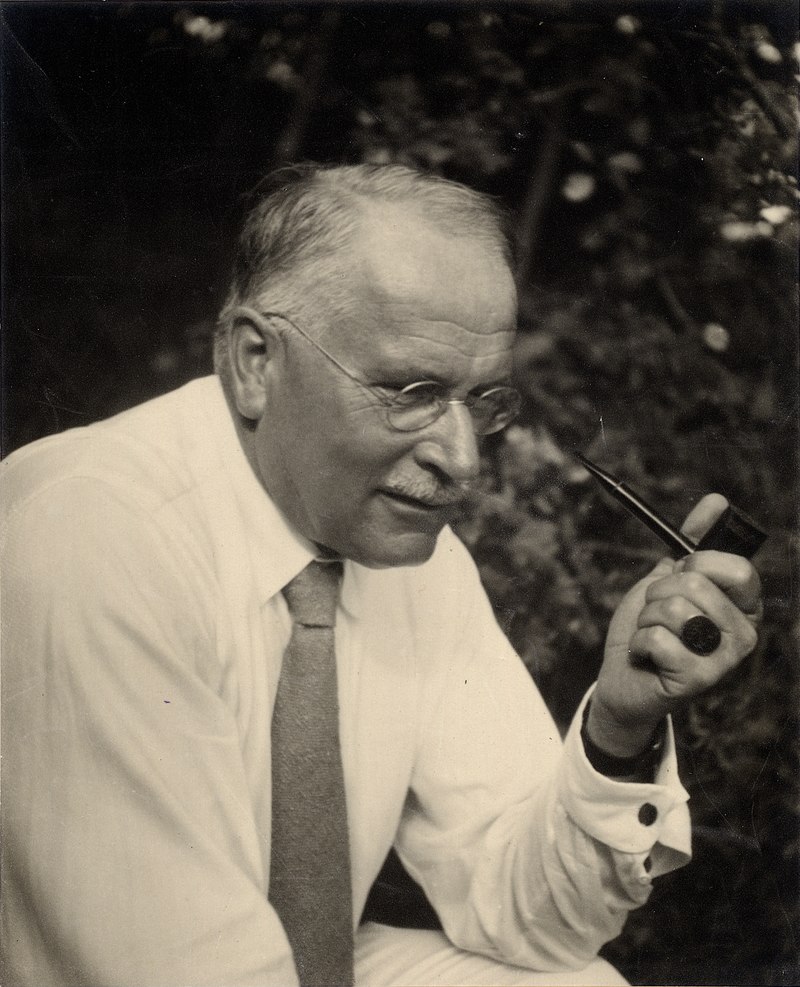
Volumes could be written on Carl G. Jung (1875-1961), the Swiss psychologist and the father of analytic or depth psychology. After all, volumes were written – by him – on many previously unaddressed topics in the psychological sciences. His central importance in pushing the boundaries of Western psychoanalysis into realms where the spirit resided and could begin to be apprehended are most important for our consideration, but Jung’s prodigious output and wide-ranging interests and depth of thought left no area of psychology untouched. More than half a century after his death, his influence is still strongly felt throughout the field. He elevated psychology well beyond the simplistic behavioral models and the reductionist Freudian sexual neurosis paradigms (he had a well-publicized split from Freud in the early 20th century after the two had collaborated for a few years) to a station whereby it became possible to see how a psychological model and accompanying insights might actually be helpful to human beings on a spiritual path. Below is a Wikipedia summary of Jung’s contributions to psychology.
Jung’s thought was formed by early family influences, which on the maternal side were a blend of interest in the occult and in solid reformed academic theology. On his father’s side were two important figures, his grandfather, the physician and academic scientist Karl Gustav Jung, and Lotte Kestner, the niece of German polymath Johann Wolfgang Goethe’s “Lottchen”. Although he was a practicing clinician and writer and as such founded analytical psychology, much of his life’s work was spent exploring other areas such as quantum physics, vitalism, Eastern and Western philosophy including epistemology, alchemy, astrology, and sociology, as well as literature and the arts. Jung’s interest in philosophy and spiritual subjects led many to view him as a mystic, although his preference was to be seen as a man of science; Jung was, unlike Freud, heavily knowledgeable on philosophical concepts and aimed to link the branch of epistemology to the more modern theories of psychology.
C. G. Jung Institute, Küsnacht, Switzerland
Key concepts
Within the field of analytical psychology, a brief survey of major concepts developed by Jung include (alphabetical):
Anima and animus – (archetype) the contrasexual aspect of a person’s psyche. In a woman’s psyche, her inner personal masculine is conceived both as a complex and an archetypal image; comparably in a man’s psyche, his inner personal feminine is conceived both as a complex and an archetypal image.
Archetype – a concept “borrowed” from anthropology to denote supposedly universal and recurring mental images or themes. Jung’s descriptions of archetypes varied over time.
Archetypal images – universal symbols that can mediate opposites in the psyche, often found in religious art, mythology, and fairy tales across cultures.
Collective unconscious – aspects of unconsciousness experienced by all people in different cultures.
Complex – the repressed organization of images and experiences that governs perception and behaviour.
Extraversion and introversion – personality traits of degrees of openness or reserve contributing to psychological type.
Individuation – the process of fulfilment of each individual “which negates neither the conscious or unconscious position but does justice to them both”.
Persona – element of the personality that arises “for reasons of adaptation or personal convenience” – the “masks” one puts on in various situations.
Psychological types – a framework for consciously orienting psychotherapists to patients, by raising to consciousness particular modes of personality, differentiation between analyst and patient.
Shadow – (archetype) the repressed, therefore unknown, aspects of the personality including those often considered to be negative.
Self – (archetype) the central overarching concept governing the individuation process, as symbolized by mandalas, the union of male and female, totality, and unity. Jung viewed it as the psyche’s central archetype.
Synchronicity – an acausal principle as a basis for the apparently random simultaneous occurrence of phenomena.
Collective unconscious
Since the establishment of psychoanalytic theory, the notion and meaning of individuals having a personal unconscious has gradually come to be commonly accepted. This was popularized by both Freud and Jung. Whereas an individual’s personal unconscious is made up of thoughts and emotions which have, at some time, been experienced or held in mind, but which have been repressed or forgotten, in contrast, the collective unconscious is neither acquired by activities within an individual’s life, nor a container of things that are thoughts, memories or ideas which are capable of being conscious during one’s life. The contents of it were never naturally “known” through physical or cognitive experience and then forgotten.
The collective unconscious consists of universal heritable elements common to all humans, distinct from other species. It encapsulates fields of evolutionary biology, history of civilization, ethnology, brain and nervous system development, and general psychological development. Considering its composition in practical physiological and psychological terms, “it consists of pre-existent forms, the archetypes, which can only become conscious secondarily and which give definite form to certain psychic contents.” Specifically contrasting himself from the work of Freud and Adler, who were wholly concerned with personal psychology, Jung writes about causal factors in personal psychology, as stemming from, influenced by an abstraction of the impersonal physical layer, the common and universal physiology among all humans. Jung considers that science would hardly deny the existence and basic nature of ‘instincts’, existing as a whole set of motivating urges. The collective unconscious acts as the frame where science can distinguish individual motivating urges, thought to be universal across all individuals of the human species, while instincts are present in all species. Jung contends, “the hypothesis of the collective unconscious is, therefore, no more daring than to assume there are instincts.”
Archetype
The archetype is a concept “borrowed” from anthropology to denote a process of nature. Jung’s definitions of archetypes varied over time and have been the subject of debate as to their usefulness. Archetypal images, also referred to as motifs in mythology, are universal symbols that can mediate opposites in the psyche, are often found in religious art, mythology and fairy tales across cultures. Jung saw archetypes as pre-configurations in nature that give rise to repeating, understandable, describable experiences. In addition the concept takes into account the passage of time and of patterns resulting from transformation. Archetypes are said to exist independently of any current event, or its effect. They are said to exert influence both across all domains of experience and throughout the stages of each individual’s unique development. Being in part based on heritable physiology, they are thought to have “existed” since humans became a differentiated species. They have been deduced through the development of storytelling over tens of thousands of years, indicating repeating patterns of individual and group experience, behaviors, and effects across the planet, apparently displaying common themes.
The concept did not originate with Jung but with Plato who first conceived of primordial patterns. Later contributions came from Adolf Bastian, and Hermann Usener among others. In the first half of the twentieth century it proved impossible to objectively isolate and categorize the notion of an archetype within a materialist frame. According to Jung, there are “as many archetypes as there are typical situations in life”, and he asserted that they have a dynamic mutual influence on one another. Their alleged presence could be extracted from thousand-year-old narratives, from comparative religion and mythology. Jung elaborated many archetypes in “The Archetypes and the Collective Unconscious” and in “Aion: Researches into the Phenomenology of the Self”. Examples of archetypes might be the shadow, the hero, the self, anima, animus, mother, father, child, and trickster.
Shadow
The shadow exists as part of the unconscious mind and is composed of the traits individuals instinctively or consciously resist identifying as their own and would rather ignore, typically: repressed ideas, weaknesses, desires, instincts, and shortcomings. Much of the shadow comes as a result of an individual’s adaptation to cultural norms and expectations. Thus, this archetype not only consists of all the things deemed unacceptable by society but also those that are not aligned with one’s own personal morals and values.
Jung argues that the shadow plays a distinctive role in balancing one’s overall psyche, the counter-balancing to consciousness – “where there is light, there must also be shadow”. Without a well-developed shadow (often “shadow work”, “integrating one’s shadow”), an individual can become shallow and extremely preoccupied with the opinions of others; that is, a walking persona. Not wanting to look at their shadows directly, Jung argues, often results in psychological projection. Individuals project imagined attitudes onto others without awareness. The qualities an individual may hate (or love) in another, may be manifestly present in the individual, who does not see the external, material truth. In order to truly grow as an individual, Jung believed that both the persona and shadow should be balanced.
The shadow can appear in dreams or visions, often taking the form of a dark, wild, exotic figure.
Extraversion and introversion
Jung was one of the first people to define introversion and extraversion in a psychological context. In Jung’s Psychological Types, he theorizes that each person falls into one of two categories: the introvert or the extravert. Jung compares these two psychological types to ancient archetypes, Apollo and Dionysus. The introvert is likened to Apollo, who shines a light on understanding. The introvert is focused on the internal world of reflection, dreaming, and vision. Thoughtful and insightful, the introvert can sometimes be uninterested in joining the activities of others. The extravert is associated with Dionysus, interested in joining the activities of the world. The extravert is focused on the outside world of objects, sensory perception, and action. Energetic and lively, the extravert may lose their sense of self in the intoxication of Dionysian pursuits. Jungian introversion and extraversion is quite different from the modern idea of introversion and extraversion. Modern theories often stay true to behaviorist means of describing such a trait (sociability, talkativeness, assertiveness, etc.), whereas Jungian introversion and extraversion are expressed as a perspective: introverts interpret the world subjectively, whereas extraverts interpret the world objectively.
Persona
In his psychological theory – which is not necessarily linked to a particular theory of social structure – the persona appears as a consciously created personality or identity, fashioned out of part of the collective psyche through socialization, acculturation and experience. Jung applied the term persona, explicitly because, in Latin, it means both personality and the masks worn by Roman actors of the classical period, expressive of the individual roles played.
The persona, he argues, is a mask for the “collective psyche”, a mask that ‘pretends’ individuality, so that both self and others believe in that identity, even if it is really no more than a well-played role through which the collective psyche is expressed. Jung regarded the “persona-mask” as a complicated system which mediates between individual consciousness and the social community: it is “a compromise between the individual and society as to what a man should appear to be”. But he also makes it quite explicit that it is, in substance, a character mask in the classical sense known to theatre, with its double function: both intended to make a certain impression on others, and to hide (part of) the true nature of the individual. The therapist then aims to assist the individuation process through which the client (re)gains their “own self” – by liberating the self, both from the deceptive cover of the persona, and from the power of unconscious impulses.
Jung has become enormously influential in management theory; not just because managers and executives have to create an appropriate “management persona” (a corporate mask) and a persuasive identity, but also because they have to evaluate what sort of people the workers are, to manage them (for example, using personality tests and peer reviews).
Spirituality
Jung’s work on himself and his patients convinced him that life has a spiritual purpose beyond material goals. Our main task, he believed, is to discover and fulfill our deep, innate potential. Based on his study of Christianity, Hinduism, Buddhism, Gnosticism, Taoism, and other traditions, Jung believed that this journey of transformation, which he called individuation, is at the mystical heart of all religions. It is a journey to meet the self and at the same time to meet the Divine [Emphasis added: editor]. Unlike Freud’s objectivist worldview, Jung’s pantheism may have led him to believe that spiritual experience was essential to our well-being, as he specifically identifies individual human life with the universe as a whole.
In 1959, Jung was asked by host John Freeman on the BBC interview program Face to Face whether he believed in God, to which Jung answered, “I do not need to believe. I know.” Jung’s ideas on religion counterbalance Freudian skepticism. Jung’s idea of religion as a practical road to individuation is still treated in modern textbooks on the psychology of religion, though his ideas have also been criticized.
Jung recommended spirituality as a cure for alcoholism, and he is considered to have had an indirect role in establishing Alcoholics Anonymous. Jung once treated an American patient (Rowland Hazard III), suffering from chronic alcoholism. After working with the patient for some time and achieving no significant progress, Jung told the man that his alcoholic condition was near to hopeless, save only the possibility of a spiritual experience. Jung noted that, occasionally, such experiences had been known to reform alcoholics when all other options had failed.
Hazard took Jung’s advice seriously and set about seeking a personal, spiritual experience. He returned home to the United States and joined a Christian evangelical movement known as the Oxford Group (later known as Moral Re-Armament). He also told other alcoholics what Jung had told him about the importance of a spiritual experience. One of the alcoholics he brought into the Oxford Group was Ebby Thacher, a long-time friend and drinking buddy of Bill Wilson, later co-founder of Alcoholics Anonymous (AA). Thacher told Wilson about the Oxford Group and, through them, Wilson became aware of Hazard’s experience with Jung. The influence of Jung thus indirectly found its way into the formation of Alcoholics Anonymous, the original twelve-step program.
The above claims are documented in the letters of Jung and Bill Wilson, excerpts of which can be found in Pass It On, published by Alcoholics Anonymous. Although the detail of this story is disputed by some historians, Jung himself discussed an Oxford Group member, who may have been the same person, in talks given around 1940. The remarks were distributed privately in transcript form, from shorthand taken by an attender (Jung reportedly approved the transcript), and later recorded in Volume 18 of his Collected Works, The Symbolic Life,
For instance, when a member of the Oxford Group comes to me in order to get treatment, I say, ‘You are in the Oxford Group; so long as you are there, you settle your affair with the Oxford Group. I can’t do it better than Jesus.
Jung goes on to state that he has seen similar cures among Roman Catholics. The 12 step program of Alcoholics Anonymous has an intense psychological backdrop, involving the human ego and dichotomy between the conscious and unconscious mind.
Inquiries into the paranormal
Jung had an apparent interest in the paranormal and occult. For decades he attended seances and claimed to have witnessed “parapsychic phenomena”. Initially, he attributed these to psychological causes, even delivering a 1919 lecture in England for the Society for Psychical Research on “The Psychological Foundations for the belief in spirits”. However, he began to “doubt whether an exclusively psychological approach can do justice to the phenomena in question” and stated that “the spirit hypothesis yields better results”. Showing his own skepticism toward this postulation, as he could not find material evidence of the existence of spirits.
Jung’s ideas about the paranormal culminated in “synchronicity”. This is the idea that certain coincidences manifest in the world, have exceptionally intense meaning to observers. Such coincidences have great effect on the observer from multiple cumulative aspects: from the immediate personal relevance of the coincidence to the observer; from the peculiarities of (the nature of, the character, novelty, curiosity of) any such coincidence; from the sheer improbability of the coincidence, having no apparent causal link (hence Jung’s essay subtitle “An Acausal Connecting Principle”). Despite his own experiments failing to confirm the phenomenon he held on to the idea as an explanation for apparent ESP. In addition, he proposed it as a functional explanation for how the I-Ching worked, although he was never clear about how synchronicity worked.
Interpretation of quantum mechanics
Jung influenced one philosophical interpretation (not the science) of quantum physics with the concept of synchronicity regarding some events as non-causal. That idea influenced the physicist Wolfgang Pauli (with whom, via a letter correspondence, he developed the notion of unus mundus in connection with the notion of nonlocality) and some other physicists.
Alchemy
Jung’s acquaintance with alchemy came between 1928–1930, when he was introduced to a manuscript of The Secret of the Golden Flower, translated by Richard Wilhelm. The work and writings of Jung from the 1930s onwards shifted to a focus on the psychological significance of alchemy.
In 1944 Jung published Psychology and Alchemy, in which he analyzed the alchemical symbols and came to the conclusion that there is a direct relationship between them and the psychoanalytical process. He argued that the alchemical process was the transformation of the impure soul (lead) to perfected soul (gold), and a metaphor for the individuation process.
In 1963 Mysterium Coniunctionis first appeared in English as part of The Collected Works of C. G. Jung. Mysterium Coniunctionis was Jung’s last major book and focused on the “Mysterium Coniunctionis” archetype, known as the sacred marriage between sun and moon. Jung argued that the stages of the alchemists, the blackening, the whitening, the reddening, and the yellowing, could be taken as symbolic of individuation—his chosen term for personal growth (75).
Source: Wikipedia – Carl Jung
My example concerns a young woman patient who, in spite of efforts made on both sides, proved to be psychologically inaccessible. The difficulty lay in the fact that she always knew better about everything. Her excellent education had provided her with a weapon ideally suited to this purpose, namely a highly polished Cartesian rationalism with an impeccably “geometrical” idea of reality. After several fruitless attempts to sweeten her rationalism with a somewhat more human understanding, I had to confine myself to the hope that something unexpected and irrational would turn up, something that burst the intellectual retort into which she had sealed herself. Well, I was sitting opposite of her one day, with my back to the window, listening to her flow of rhetoric. She had an impressive dream the night before, in which someone had given her a golden scarab-a costly piece of jewelry. While she was still telling me this dream, I heard something behind me gently tapping on the window. I turned round and saw that it was a fairly large flying insect that was knocking against the window from outside in the obvious effort to get into the dark room. This seemed to me very strange. I opened the window and immediately and caught the insect in the air as it flew in. It was a scarabaeid beetle, or common rose-chafer, whose gold-green color most nearly resembles that of a golden scarab. I handed the beetle to my patient with the words “Here is your scarab.” This broke the ice of her intellectual resistance. The treatment could now be continued with satisfactory results.
Source: Wikiquote: “Carl Jung” (Quotes, Synchronicity: An Acausal Connecting Principle (1960))
Books
- 1912 Psychology of the Unconscious
- 1916 Seven Sermons to the Dead (a part of the Red Book, published privately)
- 1921 Psychological Types
- 1933 Modern Man in Search of a Soul (essays)
- 1944 Psychology and Alchemy
- 1951 Aion: Researches into the Phenomenology of the Self
- 1952 Symbols of Transformation (revised edition of Psychology of the Unconscious)
- 1954 Answer to Job
- 1956 Mysterium Coniunctionis: An Inquiry into the Separation and Synthesis of Psychic Opposites in Alchemy
- 1961 Memories, Dreams, Reflections (autobiography, co-written with Aniela Jaffé)
- 1964 Man and His Symbols (Jung contributed one part, his last writing before his death in 1961; the other four parts are by Marie-Louise von Franz, Joseph L. Henderson, Jaffé, and Jolande Jacobi)
- 2009 The Red Book: Liber Novus (manuscript produced circa 1915–1932)
- 2020 Black Books (private journals produced circa 1913–1932, on which the Red Book is based)
 Via Perennis