

The Perennial Way
Cornerstones of Engagement: Body, Heart, Mind, Spirit
I am reminded of the beautiful story that Joseph Campbell, the famed mythologist, shared about the uniqueness of the Western way, and how it required adaptation to the specific characteristics of the Western psyche, which has valued uniqueness and individuality from its early roots:
One day, the knights of King Arthur’s court were gathered in the great banquet hall waiting for dinner to be served. It was a custom of that court that no meal should be served until an adventure had come to pass. Adventures came to pass frequently in those days so there was no great concern for hunger, and on this occasion the Grail appeared, covered with a cloth. It hung in the air for a moment and disappeared. Everyone was exalted and Sir Gawain, the nephew of King Arthur, stood up and proposed a vow. “I propose that we should all go forth in quest to behold the Grail unveiled.” Everyone agreed. Further, they decided that each should go on this quest alone and enter the forest at the point of his own choosing, where it was darkest, because it would be a disgrace to go forth in a group.
Joseph Campbell, Pathways to Bliss
You enter the forest at the darkest point, where there is no path. Where there is a way or path,
it is someone else’s path. You are not on your own path.
If you follow someone else’s way, you are not going to realize your potential.
If mere academic knowledge and intellectual understanding were the sole objectives and terminal end of the perennial philosophy, then we might be content to rest on our laurels and admire the mental edifice created by the synthesis. Proponents of the tenets of the philosophy, after all, have already come further than many in their cognitive grasp and understanding of the sweep of human history in religion and thought. But this is merely the appetizer for the main course. And here it is useful to draw a distinction that can serve us in being more precise in our consideration of the topic. While the perennial philosophy encompasses and consolidates the intellectual synthesis of the wisdom traditions of the world and its topic of focus is ostensibly the spiritual experience of humanity, the very nomenclature itself subtly leads us astray and into waters that can be deep, turbulent and difficult to navigate; a “philosophy” implies that the entire enterprise is one that can be apprehended and engaged through the mind alone. Particularly for this topic, this implication is profoundly in error. Thus, it is useful to adopt a related term – the Perennial Way, or Via Perennis (Latin). These two together, the perennial philosophy and Via Perennis, are closely related – one provides the vision, and the other supplies the means to realize it.
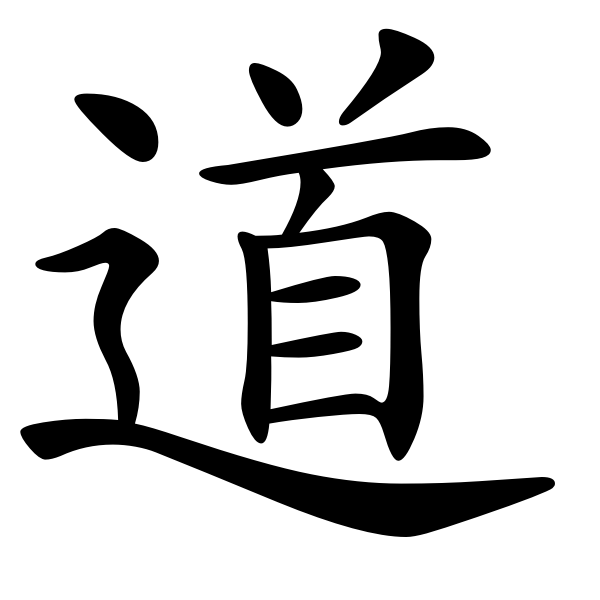
In Taoism, the Tao , translated as “Way” or “Nature” is not simply a set of principles or a philosophy from a third-person view, but a statement of the impersonal attributes of the Source and an entire way of life developing from attending to those attributes. Certain behaviors and practices are indicated by it, not because they are required by external authority, but because vision indicates they are called for to be in accordance with nature and Being. This can equally apply to our topic; the Perennial Way or Via Perennis not only affirms and takes as given the conclusions of the perennial philosophy, but adds practices, methods, and contemplations designed to involve the whole person in a life lived in accordance with the philosophy. In Hinduism, such a collection is termed a sadhana – a coherent and ongoing spiritual practice. The aim of the Via Perennis is ultimately entirely practical, to assist the individual in attaining first-hand, experiential knowledge, or gnosis, of the mystical state. To reiterate Huxley’s quote – the potential is that it is possible for human beings to love, know and, from virtually, to become actually identical with the divine Ground, and the ultimate aim is to achieve this unitive knowledge of the Godhead [as] the final end and purpose of human existence. Via Perennis takes the theory of the philosophy and translates it into action.
Unfortunately, it’s far too easy in Western society to fall into a permanent head-space and let other aspects of the body-mind atrophy on the vine. The key weakness is that while the philosophy may lay the bedrock intellectual principles in place, like so many other philosophies, it does nothing to prepare the individual in a holistic way for entry into rarefied realms. And this weakness can be critical, for if one’s whole being is not prepared though various practices and trainings, the potential is present for the human vessel to shatter under the pressure of the forces encountered. Honing the intellect alone, as philosophers and thinkers are wont to do, is not enough; the moral development must be suitable, the nervous system strong, calm and resilient, a certain degree of healthy heart-centered emotional growth must be firmly rooted, the physical embodiment must be sound and conductive, and importantly, the psychological development must be mature and robust enough that undesirable permanent psychological damage can be averted. The amplification of energy encountered in one’s system upon breakthrough to new levels of consciousness is truly revolutionary, unlike anything one may have encountered in one’s life. A pure and devotional consecration with the intuition and, better yet, ability to surrender to the larger trans-egoic reality is vital: ego-centered manipulations and motivations can lead to disaster.
Integrating the amplified energy requires a whole body-mind involvement resting on several cornerstones of engagement. You will find sections of this website devoted to each of the cornerstones I’ve found necessary to integrate and stabilize new consciousness:
- Meditations; tradition source scriptures and literature – Spiritual
- Devotional Prayer, Energy Psychology Methods, Spiritual Emergencies – Emotional/Psychological
- Perennial philosophy, Philosophic thought; Transpersonal and Depth Psychology; Integral theory – Intellectual
- Bodywork, Tai Chi, Qigong – Physical
- Music, Art, Nature, Cultivation of Beauty – Contemplative Arts
Taken together, these foundational supports are designed to engage the full spectrum of body-mind energies – body, heart, mind and spirit. There’s also biographic information for a group of guides and mentors who have been helpful to me in my walk, whether through personal acquaintance and face-to-face interactions, or through the pages of history and mind-to-mind communication via the spoken word or written page. A resource page has also been provided for your convenience.
Know this as you explore these methods – the specifics provided here for each of the cornerstones are a way, not the way. That’s why I subtitled the site “An integral spiritual practice for Occidental hearts, minds, and spirits” – with the indefinite article at the beginning. These are practices and methods that have been effective for me. There is no one path for everyone in Via Perennis. Each person’s way is likely a little different; some may pursue yoga and dance as physical disciplines; some may find other philosophical traditions convincing and mind-opening to the possibilities of transcendence, while others may get there through literature or poetry. Some may have extensive experience with Buddhist meditations or Native American rites and shamanic systems. This variety of possibilities is both a blessing and a burden. It is a burden in the sense that one must accept responsibility for finding and consistently following his own path. Religions already have prescribed set of rites and rituals ready to hand to their adherents. The perennialist has to build his or her own practice from the ground up. But this is the blessing of it, as well – your path will be custom-made, tailored for the unique individual you are. Find what resonates for you and build around it. The only requirement in my view is that your base should be broad enough to support and maintain an entry into mystic realms while retaining functional, embodied competence and presence in the former stance of consciousness. A broader, diversified approach is certainly better than a narrow one. My recommendation is that your practice cover all of the major bases – Body, Heart, Mind, and Spirit.
To paraphrase Campbell, then, let us each “Enter the forest at the darkest point, where there is no path.” Or perhaps more properly in this interpretation, where a path, though it may be in darkness and replete with unforeseen hazards, is visible only to you. There, with good fortune, you may find the Holy Grail unveiled.
 Via Perennis